
Introduction
If you have ever searched what is an internal medicine doctor is, you may be trying to understand what kind of physician treats adults and whether an internist is the right healthcare provider for you.
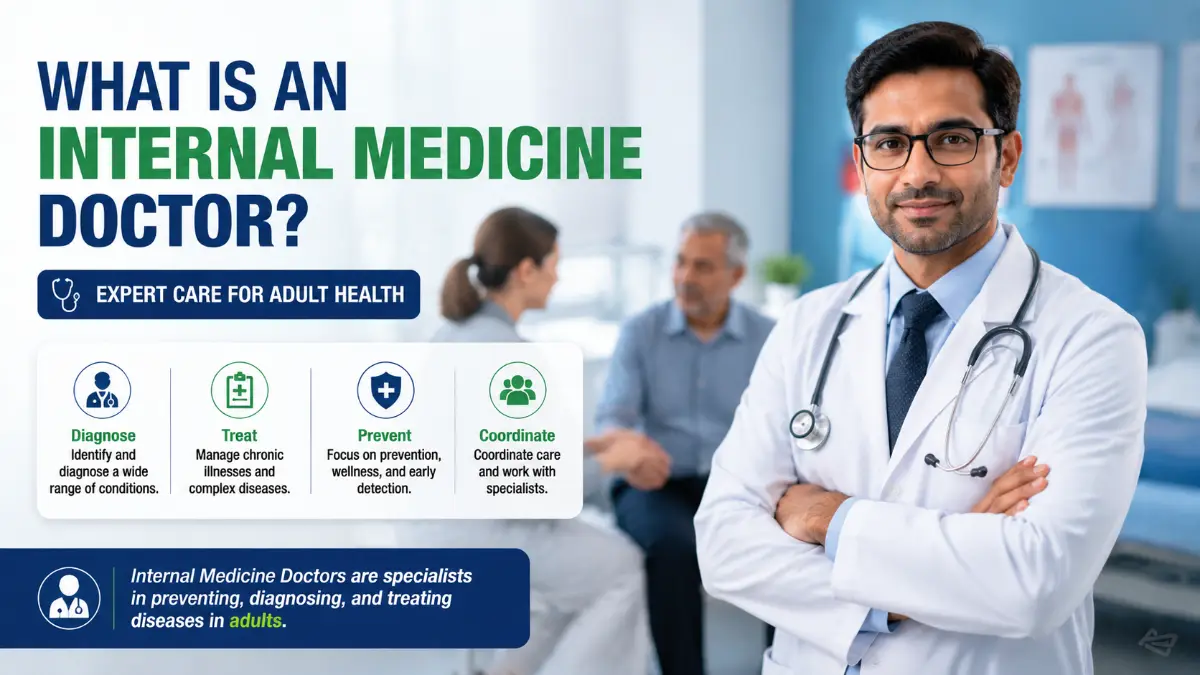
An internal medicine doctor, also called an internist, is a physician who specializes in preventing, diagnosing, and treating health conditions in adults. Unlike pediatricians who care for children, internists focus on adult health problems, including common illnesses, chronic diseases, and complex medical conditions.
Many people choose an internal medicine doctor as their primary care physician because internists are trained to manage multiple health concerns at the same time. For example, an adult with diabetes, high blood pressure, and cholesterol issues may benefit from a doctor who understands how these conditions interact. This guide explains what internists do, what conditions they treat, how they compare with other doctors, and when seeing one may be helpful.
What Is an Internal Medicine Doctor?
An internal medicine doctor is a medical physician trained specifically in adult healthcare.
The medical specialty of internal medicine focuses on:
- Preventing diseases
- Diagnosing illnesses
- Managing long-term conditions
- Coordinating specialist care
- Promoting overall adult wellness
Internal medicine doctors are often called internists. The word “internal” does not mean they only treat internal organs. Instead, it refers to their broad training in understanding how different systems of the adult body work together.
What Does an Internal Medicine Doctor Do?
An internist provides comprehensive medical care for adults.
Their responsibilities commonly include:
| Area of Care | Examples |
| Preventive care | Health screenings, vaccinations, wellness exams |
| Diagnosis | Identifying causes of symptoms |
| Chronic disease management | Diabetes, hypertension, asthma |
| Acute illness treatment | Infections, flu, injuries |
| Healthcare coordination | Working with specialists |
An internist may become the main doctor who understands a patient’s complete medical history.
Also Read: Small Hard Painless Lump on Ear Cartilage: What It Means
What Conditions Do Internal Medicine Doctors Treat?
Internal medicine doctors treat a wide range of adult health conditions.
Common examples include:
Heart and Blood Vessel Conditions
Internists commonly help manage:
- High blood pressure
- High cholesterol
- Heart disease risk factors
They may monitor symptoms and coordinate care with cardiologists when needed.
Diabetes
Diabetes requires long-term management.
An internist may help patients:
- Monitor blood sugar
- Understand medication options
- Improve lifestyle habits
- Prevent complications
Respiratory Problems
Internists treat many breathing-related conditions, including:
- Asthma
- Bronchitis
- Chronic respiratory problems
Digestive Health Issues
They may evaluate symptoms related to:
- Acid reflux
- Abdominal discomfort
- Digestive disorders
General Adult Health Concerns
Internists also treat:
- Infections
- Fatigue
- Joint pain
- Skin concerns
- Sleep problems
Internal Medicine Doctor vs Primary Care Doctor
Many people wonder whether an internist is a primary care doctor. The answer is yes. A primary care physician is a doctor who provides first-contact healthcare and ongoing medical support. Internal medicine doctors are one type of primary care provider.
Other primary care doctors include:
- Family medicine physicians
- Pediatricians
- General practitioners
Read More: Knee Cartilage: Damage, Repair, Exercises & Treatment Guide
Internal Medicine Doctor vs Family Medicine Doctor
| Feature | Internal Medicine Doctor | Family Medicine Doctor |
| Main focus | Adults | All age groups |
| Patients | Usually adults | Children and adults |
| Training focus | Adult diseases | Complete family healthcare |
| Chronic disease care | Strong focus | Also provided |
| Preventive care | Yes | Yes |
The best choice depends on your healthcare needs.
An adult managing multiple medical conditions may prefer an internist, while someone wanting one doctor for the entire family may choose family medicine.
What Training Does an Internal Medicine Doctor Receive?
Internal medicine doctors complete extensive medical education.
Typical training includes:
- Medical school
- Internal medicine residency training
- Optional fellowship training for subspecialties
Some internists continue training in areas such as:
- Cardiology
- Gastroenterology
- Endocrinology
- Pulmonary medicine
Doctors who complete additional training become specialists within internal medicine.
When Should You See an Internal Medicine Doctor?
You may consider seeing an internist if you:
- Need a regular adult primary care doctor
- Have multiple health conditions
- Need help managing chronic diseases
- Want preventive health guidance
- Need ongoing medical monitoring
Examples:
A 45-year-old adult with high blood pressure and cholesterol concerns may benefit from regular visits with an internist.
A 70-year-old adult managing several medications may also benefit from an internist who coordinates their care.
What Happens During an Internal Medicine Visit?
A typical appointment may include:
Medical History Review
The doctor may discuss:
- Previous illnesses
- Medications
- Family health history
- Lifestyle habits
Physical Examination
Depending on your needs, this may include:
- Checking vital signs
- Listening to heart and lungs
- Reviewing symptoms
Health Planning
Your doctor may recommend:
- Screening tests
- Lifestyle changes
- Medication adjustments
- Specialist referrals
Benefits of Having an Internal Medicine Doctor
Choosing an internist can provide several advantages.
Better Long-Term Care
A regular doctor understands your medical history and health patterns.
Chronic Disease Support
Internists often help patients manage conditions that require ongoing attention.
Coordinated Healthcare
They can help organize care between different specialists.
Preventive Health Focus
Internists do not only treat illness. They also focus on preventing future problems.
Questions to Ask Before Choosing an Internist
Before selecting a doctor, consider asking:
- Are you accepting new patients?
- What conditions do you commonly treat?
- Do you provide preventive health visits?
- How do you coordinate specialist care?
- What communication options are available?
Finding a doctor who fits your needs can improve your long-term healthcare experience.
Common Misconceptions About Internal Medicine Doctors
Myth: Internists Only Treat Serious Diseases
Fact:
Internists treat everyday health concerns as well as complex conditions.
Myth: Internal Medicine Means Surgery
Fact:
Internal medicine doctors are physicians who generally provide non-surgical medical care.
Myth: Internists Only Work In Hospitals
Fact:
Many internists work in outpatient clinics and provide regular primary care.
How to Choose Between an Internist and Another Doctor
The right choice depends on your situation.
Choose an internist if you:
- Are an adult seeking primary care
- Have multiple medical concerns
- Want long-term disease management
Consider family medicine if:
- You want care for children and adults in one practice
- Your entire family needs healthcare support
Conclusion
Understanding what is an internal medicine doctor is helps you make better healthcare decisions. Internists are adult healthcare specialists who provide preventive care, diagnose illnesses, manage chronic conditions, and coordinate treatment when additional specialists are needed.
For many adults, an internal medicine doctor can become a trusted long-term healthcare partner by helping maintain wellness and manage medical concerns throughout different stages of life.
Choosing the right doctor depends on your personal health needs, medical history, and the type of relationship you want with your healthcare provider.
Frequently Asked Questions
What is an internal medicine doctor?
An internal medicine doctor is a physician who specializes in preventing, diagnosing, and treating medical conditions in adults.
Is an internist the same as a primary care doctor?
Yes. Many internists work as primary care doctors for adult patients.
What does an internal medicine doctor treat?
Internists treat many adult conditions, including diabetes, high blood pressure, infections, respiratory problems, and chronic diseases.
Can an internist treat older adults?
Yes. Internists commonly care for older adults and help manage multiple health conditions.
What is the difference between an internist and a specialist?
An internist provides broad adult healthcare, while a specialist focuses on a specific medical area.
Do internal medicine doctors perform physical exams?
Yes. They commonly perform routine examinations, preventive screenings, and health assessments.
Should I choose an internist or family doctor?
Adults who want specialized adult healthcare may prefer an internist, while families wanting one doctor for all ages may choose family medicine.
