
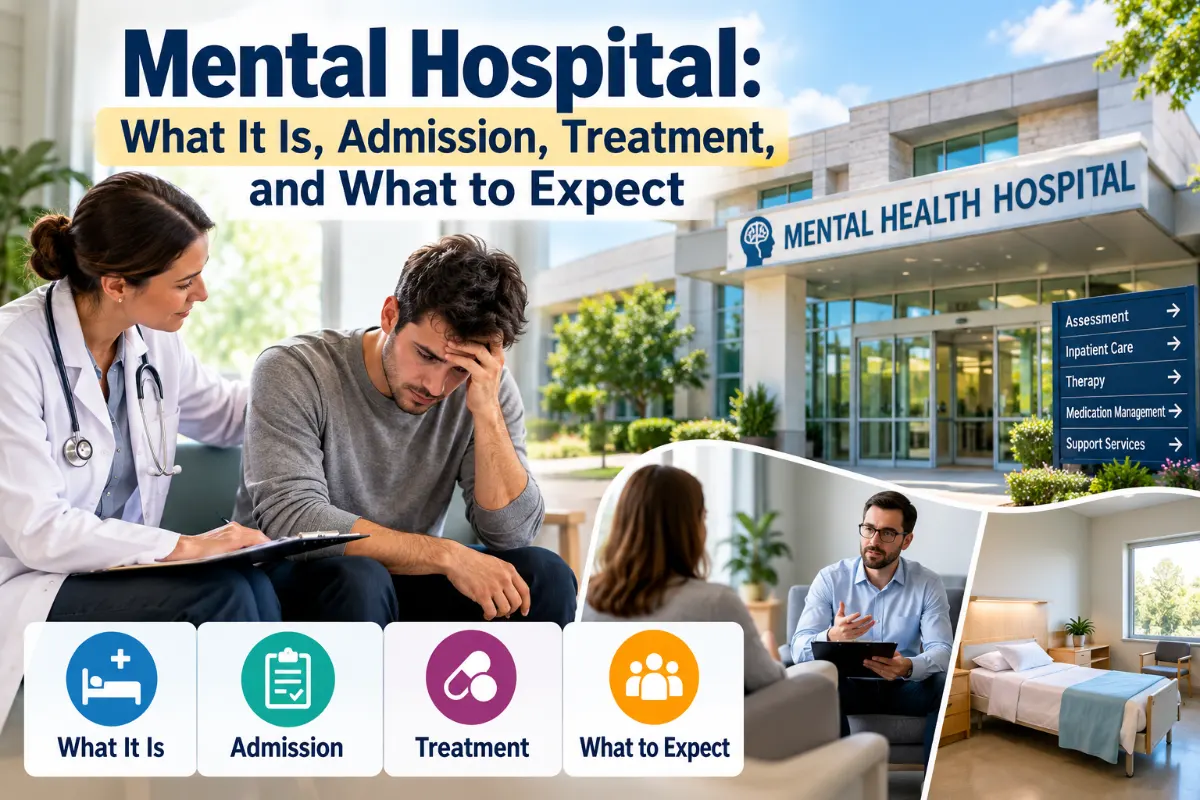
A mental hospital, also known as a psychiatric hospital, is a medical facility that provides intensive care for people experiencing serious mental health symptoms or crises. Patients receive psychiatric evaluations, treatment, nursing support, and 24-hour supervision when outpatient care isn’t enough to meet their needs. Depending on the circumstances and applicable laws, admission may be voluntary or involuntary.
Psychiatric hospitalization aims to stabilize symptoms, address immediate safety concerns, and help patients prepare for continued care after discharge. Some people need only a short hospital stay, while others require longer treatment. What patients experience depends on their condition, individual treatment needs, and the facility providing care.
What Is a Mental Hospital?
A psychiatric hospital specializes in assessing and treating mental health conditions that require inpatient care. Some operate as standalone facilities, while others are dedicated psychiatric units within general hospitals.
Treatment may include medication, psychotherapy, crisis intervention, and regular monitoring by mental health professionals. These facilities provide a structured environment where patients can receive intensive support while clinicians assess their symptoms and safety needs.
Inpatient mental health treatment differs from other types of mental health care:
- Inpatient hospitalization: Provides 24-hour clinical supervision and intensive treatment, usually for acute mental health needs.
- Residential treatment: Offers structured, live-in mental health care, generally with a different level of medical supervision.
- Outpatient therapy: Allows people to continue living at home while attending scheduled appointments or treatment programs.
The right setting depends on the severity of a person’s symptoms, their safety needs, and a professional assessment. Inpatient psychiatric hospitalization is generally appropriate when a person cannot be safely or adequately treated at a lower level of care.
When Might Someone Need Psychiatric Hospitalization?
A person may need hospitalization when their mental health symptoms become so severe that outpatient treatment cannot provide adequate care or keep them safe.
Common reasons for an urgent psychiatric assessment include:
- Suicidal thoughts involving immediate danger, intent, or a specific plan.
- Serious self-harm behavior or an immediate risk of harming others.
- Severe psychosis, including hallucinations or delusions that interfere with safety or daily functioning.
- Acute manic episodes involving dangerous behavior, severe agitation, or impaired judgment.
- Severe depression or another psychiatric condition that makes it difficult to meet essential needs, such as eating, drinking, or staying safe.
Experiencing one of these symptoms doesn’t automatically mean someone needs to be hospitalized. A qualified clinician considers the person’s condition, immediate risks, available support, and whether treatment outside the hospital would be safe and effective.
If someone is in immediate danger or experiencing a medical emergency, call 911 in the United States or go to the nearest emergency department.
How Does Admission to a Mental Hospital Work?
Admission usually starts with an assessment by a healthcare professional. Someone seeking help may visit an emergency department, contact a mental health crisis service, or approach a psychiatric treatment facility.
During the evaluation, clinicians ask about symptoms, medical history, current medications, and safety concerns. They may also check for physical health conditions that could be contributing to the person’s psychiatric symptoms.
Voluntary vs. Involuntary Psychiatric Hospitalization
Voluntary admission means a person agrees to receive inpatient psychiatric treatment. Patients can generally participate in decisions about their care and request discharge. However, asking to leave doesn’t always mean they can be discharged immediately.
Involuntary admission may occur when someone meets specific legal requirements for psychiatric evaluation or hospitalization without their consent. These situations often involve serious safety concerns or an inability to meet basic needs because of a mental health condition.
The rules aren’t the same everywhere. US states have different legal standards, evaluation procedures, review periods, and protections. A family member’s concern alone doesn’t automatically authorize involuntary hospitalization.
Patients also retain important legal rights during hospitalization, including protections concerning treatment, privacy, and applicable review or complaint procedures. The American Psychiatric Association’s guidance on voluntary and involuntary hospitalization emphasizes appropriate care and legal safeguards, although specific requirements depend on state law.
What Happens During Intake?
Once admitted, patients typically undergo psychiatric and medical assessments. Staff review medications, explain the hospital’s rules, and check personal belongings for items that could create safety risks.
Patients may also be asked about previous mental health treatment, current symptoms, substance use, allergies, and emergency contacts. This information helps the treatment team develop an initial care plan suited to their needs.
What Happens in a Mental Hospital?
Most psychiatric hospitals follow a structured daily routine, but schedules and treatment options vary between facilities.
Patients may meet with psychiatrists, attend individual or group therapy, take prescribed medications, and participate in therapeutic activities. Nurses and other healthcare professionals monitor symptoms, treatment responses, and safety throughout the stay.
A typical day might include meals, medication administration, clinical appointments, group sessions, recreational activities, and scheduled rest periods.
Safety is another important part of inpatient care. Depending on the facility and a patient’s needs, certain personal belongings may be restricted, and staff may conduct regular safety checks. Rules for phone calls and visitors also differ from one hospital to another.
Being admitted for the first time can feel unfamiliar, especially when someone doesn’t know what to expect. Hospital staff should explain the treatment plan, daily schedule, and relevant rules. Patients can ask questions about their care and use the hospital’s procedures to raise concerns.
How Long Do Patients Stay, and What Happens After Discharge?
There isn’t a standard length of stay for psychiatric hospitalization. Some patients leave after a few days, while others need more time to stabilize and prepare for discharge.
Several factors influence how long someone stays, including symptom severity, safety concerns, treatment response, available support, and the ability to arrange suitable follow-up care.
Discharge planning often begins before the hospital stay ends. Patients may receive medication instructions, follow-up appointments, crisis support information, and recommendations for outpatient therapy or other services.
Leaving the hospital doesn’t necessarily mean every symptom has disappeared. It generally means the treatment team believes the patient can safely continue recovery outside the hospital with appropriate care and support.
How Much Does a Mental Hospital Cost?
The cost of psychiatric hospitalization varies widely based on the facility, length of stay, insurance coverage, and treatment services.
Many US health insurance plans cover medically necessary inpatient psychiatric treatment, although coverage for a particular stay depends on the plan’s terms and requirements. Provider networks, deductibles, copayments, coinsurance, and noncovered services can all affect out-of-pocket expenses.
Under US health insurance rules, Marketplace health plans cover inpatient mental and behavioral health services, although specific benefits and costs vary by plan and state.
Medicare and Medicaid also cover eligible inpatient mental health services, but their benefits and patient costs differ. Under Original Medicare’s inpatient mental health coverage, Part A has a 190-day lifetime coverage limit for freestanding psychiatric hospitals. That limit does not apply to psychiatric units within general hospitals.
Before a planned admission, contact both the hospital and your insurer to ask about network participation, authorization requirements, expected expenses, and financial assistance. However, don’t delay emergency care just to investigate treatment costs.
How to Find a Mental Hospital or Get Immediate Help
If the situation isn’t an emergency, a primary care clinician, psychiatrist, or licensed mental health professional can assess symptoms and help determine whether inpatient treatment is necessary.
In the United States, FindTreatment.gov also offers a national directory of behavioral health treatment facilities.
When choosing a hospital, ask whether it treats the relevant condition, accepts the patient’s insurance, has appropriate specialists, and provides discharge planning. You can also ask about visitation policies, patient rights, and how admission works.
For urgent psychiatric symptoms or immediate safety concerns, seek prompt evaluation through an emergency department or an appropriate crisis service rather than waiting for a routine appointment.
In the United States, the 988 Suicide & Crisis Lifeline offers free, confidential support by phone or text for people experiencing suicidal thoughts, emotional distress, or other mental health crises. Calling 988 does not automatically lead to hospitalization.
If someone is in immediate danger or experiencing a medical emergency, call 911 or go to an emergency department. Outside the United States, contact the appropriate local emergency service or mental health crisis provider.
Read also: Rigevidon: What It Is, How It Works, and What to Expect
Frequently Asked Questions
Can family members visit someone in a mental hospital?
Often, yes. Many psychiatric hospitals allow family visits, but visiting hours and restrictions depend on the facility, the patient’s preferences, privacy requirements, and clinical or safety considerations. It’s best to contact the hospital directly to confirm its current visitation rules.
What should someone bring to a psychiatric hospital?
Most facilities allow certain comfortable clothes and basic personal items, although safety rules vary. Before arriving, ask what clothing, identification, medication information, and personal belongings are permitted. Hospital staff may need to store items that aren’t allowed on the unit.
