
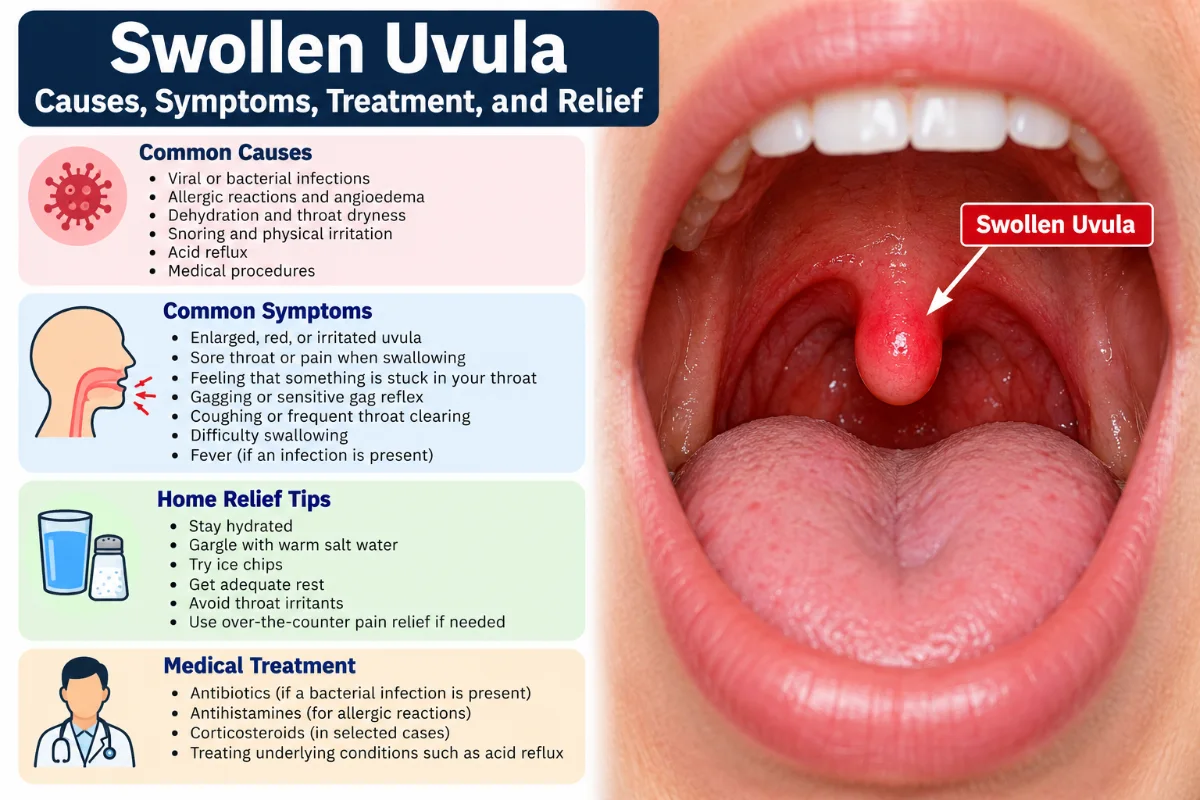
A swollen uvula occurs when the small, fleshy piece of tissue hanging at the back of your throat becomes enlarged or inflamed. Known as uvulitis, this condition can develop because of infections, allergies, dehydration, or throat irritation. Common symptoms include a sore throat, gagging, and difficulty swallowing. Mild swelling may improve within a day or two, but breathing problems, rapidly worsening throat swelling, or an inability to swallow saliva require emergency medical attention.
Treatment depends on what’s causing the swelling. Drinking water, gargling with warm salt water, and avoiding irritants may help relieve mild discomfort. However, swelling caused by an infection, allergic reaction, or another underlying condition may require medical treatment.
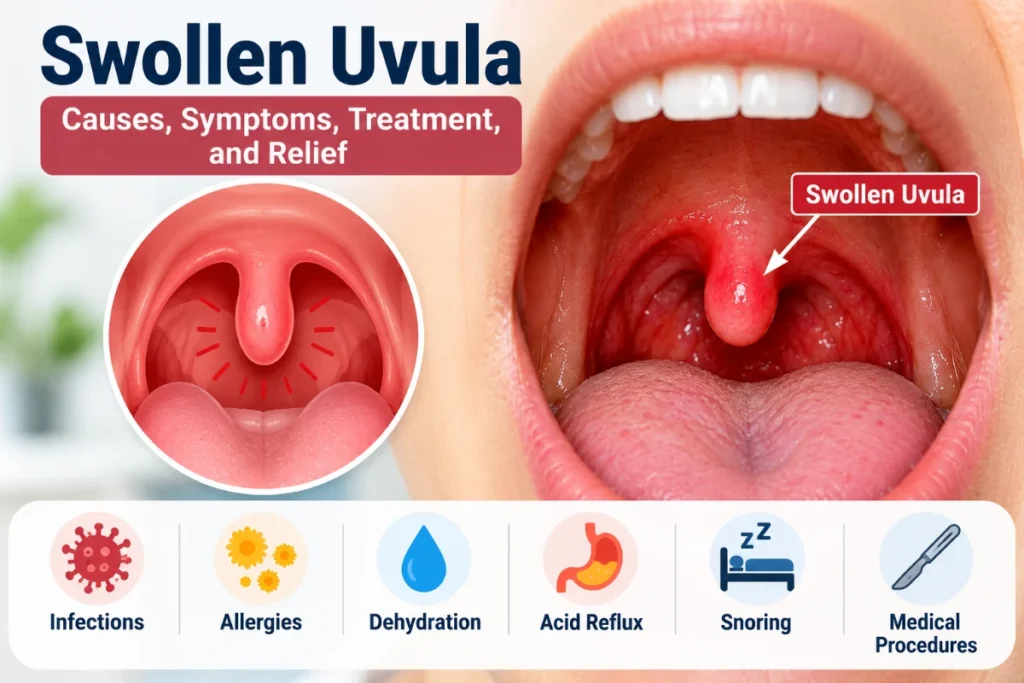
What Causes a Swollen Uvula?
Several conditions can cause the uvula to swell. Some lead to temporary irritation that improves on its own, while others require medical attention. Understanding the possible causes of uvulitis can help you recognize when your symptoms need further evaluation.
1. Viral and bacterial infections
Throat infections are a common cause of uvulitis. Respiratory viruses, including those that cause colds and influenza, can inflame the uvula and surrounding tissues. Bacterial infections, particularly strep throat, can also cause swelling.
If an infection is responsible, you may notice throat pain, redness, fever, or swollen lymph nodes. Because viral and bacterial infections can produce similar symptoms, a healthcare professional may need to examine your throat or perform a test to determine the cause.
2. Allergic reactions and angioedema
Certain foods, medications, pollen, and other allergens can trigger swelling in the throat. Another possible cause is angioedema, which involves swelling in deeper tissues, including the mucous membranes of the mouth and throat.
Sudden uvular swelling accompanied by breathing difficulties, swollen lips or tongue, or throat tightness can indicate a serious reaction. Some blood pressure medications, particularly ACE inhibitors, can also cause angioedema through a mechanism different from a typical allergic reaction.
3. Dehydration and throat dryness
Dehydration can leave your mouth and throat dry and irritated. Sleeping with your mouth open or spending time in dry indoor air may make the discomfort more noticeable, especially when you wake up.
Dryness can also cause an itchy or scratchy throat, although these symptoms don’t necessarily mean your uvula is inflamed.
4. Snoring and physical irritation
Heavy snoring causes repeated vibrations in the tissues at the back of your throat. This irritation may contribute to uvular swelling, particularly after a night of frequent or intense snoring.
Smoking, vaping, and exposure to chemical fumes can also irritate sensitive throat tissues and contribute to inflammation.
5. Acid reflux
Acid reflux happens when stomach contents flow backward into the esophagus. When reflux reaches the throat, it can irritate nearby tissues, potentially including the uvula.
You may also notice hoarseness, frequent throat clearing, or a sour taste in your mouth. Persistent throat irritation can sometimes contribute to a cobblestone appearance at the back of the throat, although these bumps are different from uvular swelling.
6. Medical procedures
Temporary uvular swelling can occur after procedures involving the mouth or throat. Breathing tubes used during anesthesia, endoscopy instruments, and throat surgery can occasionally irritate or injure the uvula.
The swelling may gradually improve as the irritated tissue heals. However, worsening symptoms or difficulty breathing after a medical procedure require immediate evaluation.
Because these conditions can produce similar symptoms, simply looking at your uvula may not reveal what’s causing the swelling.
What Are the Symptoms of Uvulitis?
Uvulitis symptoms range from mild irritation to considerable discomfort, depending on the cause and severity of the inflammation.
Common symptoms include:
- A visibly enlarged, red, or irritated uvula
- Sore throat or pain when swallowing
- A sensation that something is stuck in your throat
- Gagging or an unusually sensitive gag reflex
- Coughing or frequent throat clearing
- Difficulty swallowing food or liquids
- Fever, particularly when an infection is present
If your uvula becomes large enough to touch your tongue, you may feel as though something is hanging in your throat. Although this sensation can be uncomfortable and trigger gagging, it doesn’t necessarily mean your airway is blocked.
However, actual breathing difficulties or an inability to swallow saliva are emergency warning signs and should never be managed at home.
How to Relieve a Swollen Uvula at Home
If the swelling is mild and you have no emergency symptoms, simple home-care measures may make your throat more comfortable while it heals. These swollen uvula home remedies can relieve discomfort, but they won’t necessarily treat the underlying cause.
Stay hydrated. Sip water regularly throughout the day to keep your throat moist. Cool water may feel especially soothing if swallowing is uncomfortable.
Gargle with warm salt water. Mix about half a teaspoon of salt into a glass of warm water. Gargle gently and spit it out. This may ease throat irritation, although it won’t necessarily eliminate the cause of the swelling.
Try ice chips. Slowly sucking on ice chips or sipping a cool drink may temporarily soothe irritated throat tissues.
Get adequate rest. Allow your body time to recover, particularly if the swelling occurs alongside a cold or another respiratory infection.
Avoid throat irritants. Stay away from cigarette smoke, vaping aerosols, and harsh chemical fumes. Avoid foods and drinks that noticeably worsen your throat discomfort.
Consider OTC pain relief. Acetaminophen or ibuprofen may help reduce pain when taken according to package directions. However, these medications aren’t appropriate for everyone. Ibuprofen, for example, may be unsuitable for people with certain kidney conditions, stomach ulcers, or other medical problems.
Mild swallowing discomfort may improve with these measures. If swallowing becomes progressively harder, seek prompt medical attention. Being unable to swallow your saliva requires emergency care.
Medical Treatment for a Swollen Uvula
Medical treatment addresses the underlying cause of the swelling rather than simply reducing inflammation. After examining your throat and discussing your symptoms, a healthcare professional may recommend one or more treatments.
Antibiotics: If a bacterial infection is confirmed or strongly suspected, your clinician may prescribe antibiotics. They don’t work against viruses and aren’t necessary for every case of uvulitis.
Antihistamines: These medications may help with swelling caused by certain allergic reactions. However, they cannot replace emergency treatment for anaphylaxis. Angioedema caused by ACE inhibitors generally doesn’t respond to standard antihistamines because it isn’t a typical histamine-mediated allergic reaction.
Corticosteroids: In selected cases involving substantial inflammation, a clinician may prescribe corticosteroids to reduce swelling. Mild uvulitis usually doesn’t require these medications.
Treatment of underlying conditions: If acid reflux contributes to throat irritation, managing the reflux may help. Swelling potentially related to medication requires professional evaluation, especially when angioedema is suspected.
How Is Uvulitis Diagnosed?
Diagnosis typically begins with a physical examination. A healthcare professional examines your uvula and surrounding throat tissues while asking when the symptoms started and whether you’ve recently experienced an infection, allergic reaction, medication change, or throat irritation.
Depending on the findings, testing may include a throat swab to check for bacterial infection. Blood tests or allergy investigations may also be appropriate in selected cases, particularly when symptoms persist or recur.
If your uvula repeatedly becomes swollen, identifying the underlying trigger is more helpful than continually relying on home remedies.
How Long Does a Swollen Uvula Last?
Mild uvular swelling often improves within 24–48 hours, especially when temporary irritation is the cause. However, recovery time varies depending on what’s causing the inflammation and how severe it is.
If an infection is responsible, the uvula may remain swollen or uncomfortable until the illness improves. Swelling related to allergies or medications may require specific treatment before it subsides.
The one- to two-day recovery period is only an estimate. If you haven’t noticed improvement after a couple of days, contact a healthcare professional for advice. Seek medical attention sooner if you develop a fever, increasing pain, or worsening symptoms.
Recurring uvular swelling also deserves medical evaluation, even if each episode eventually resolves.
When Is a Swollen Uvula Dangerous?
Most cases of mild uvulitis aren’t life-threatening. However, severe swelling can sometimes interfere with breathing or occur as part of a serious allergic reaction.
When to Seek Emergency Help
Call 911 in the United States or your local emergency number immediately if you experience:
- Difficulty breathing, wheezing, or noisy breathing
- Rapidly worsening throat swelling
- An inability to swallow saliva or persistent drooling
- Choking or a feeling that your airway is closing
- Sudden throat swelling accompanied by swollen lips or tongue, faintness, or other signs of a severe allergic reaction
These symptoms may indicate airway obstruction or anaphylaxis, both of which require immediate medical attention.
If you have a prescribed epinephrine auto-injector and suspect anaphylaxis, use it as directed and seek emergency care immediately. Don’t wait for antihistamines or home remedies to relieve the symptoms.
When to See a Doctor
Arrange a prompt medical evaluation if your swollen uvula is accompanied by significant throat pain, fever, increasing difficulty swallowing, or trouble drinking enough fluids.
You should also contact a healthcare professional if the swelling doesn’t improve, repeatedly returns, or develops after starting a new medication. Even without breathing difficulties, persistent or unexplained swelling may require further investigation.
Read also: Rigevidon: What It Is, How It Works, and What to Expect
Frequently Asked Questions
Is a swollen uvula contagious?
A swollen uvula itself isn’t contagious. However, if a viral or bacterial infection causes the swelling, that infection may spread to other people. Uvular swelling caused by allergies, dehydration, snoring, or physical irritation cannot be passed from one person to another.
Why is my uvula swollen when I wake up?
Waking up with a swollen uvula may be related to heavy snoring, breathing through your mouth while sleeping, dehydration, or dry bedroom air. Acid reflux during the night can also irritate your throat. If morning swelling occurs frequently, becomes painful, or makes swallowing difficult, consult a healthcare professional to identify the underlying cause.
