
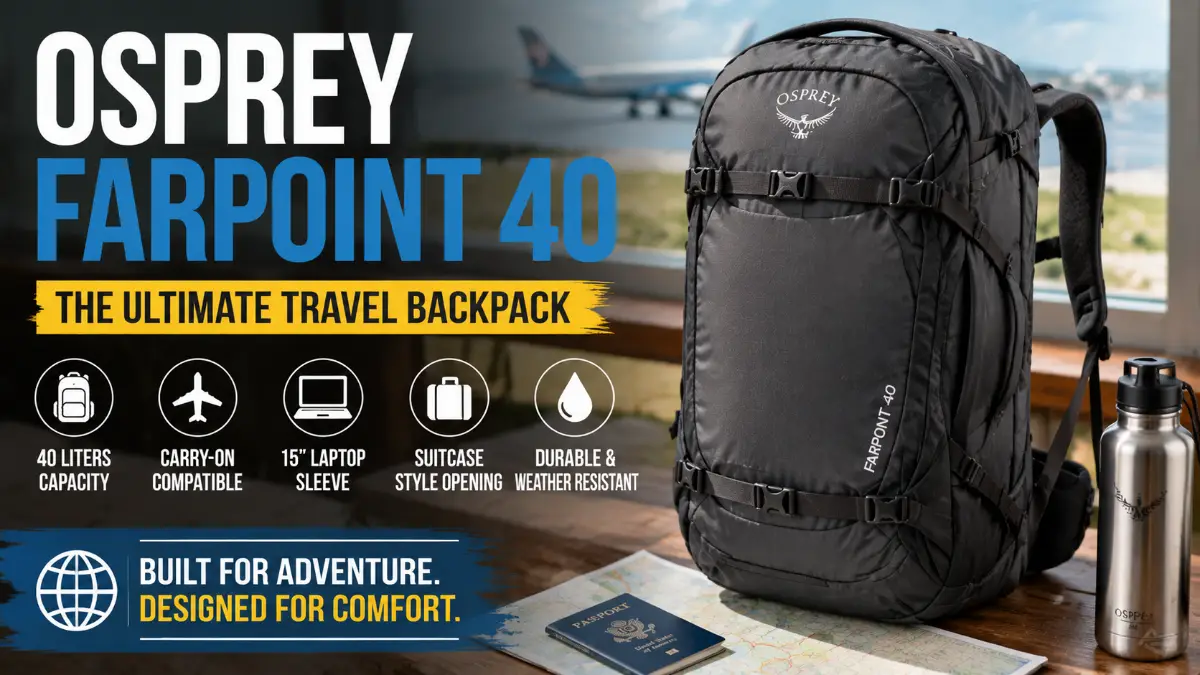
Buying a premium travel backpack is a serious decision. A good backpack can make traveling easier, but the wrong choice can lead to discomfort, wasted space, and frustration during your journey. The Osprey Farpoint 40 is widely considered one of the most popular travel backpacks for international trips and carry-on travelers. It has earned a strong reputation because of its durability, organization, and travel-friendly design.
However, no backpack is perfect. Before purchasing, it is important to understand the possible disadvantages, limitations, and situations where this backpack may not be the best choice. This guide explains the most common Osprey Farpoint 40 problems, mistakes buyers make, and what you should consider before adding it to your travel setup.
Quick Overview Before Buying
| Category | Details |
| Product Type | Travel backpack |
| Capacity | Approximately 40 liters |
| Best Use | Flights, cities, backpacking trips |
| Not Ideal For | Heavy outdoor trekking |
| Main Strength | Travel organization |
| Main Limitation | Limited space for bulky gear |
1. The Capacity May Feel Small for Some Travelers
The biggest surprise for many first-time buyers is that 40 liters is not as large as it sounds.
Many travelers expect the backpack to hold:
- Multiple outfits
- Large shoes
- Camera equipment
- Electronics
- Toiletries
- Extra accessories
While efficient packing makes a big difference, travelers who pack heavily may find the available space limited. The backpack works best for people who follow a minimalist packing style.
2. Overpacking Can Reduce Comfort
A common mistake is treating a travel backpack like a suitcase. Because the bag has a structured design, users may try to fill every available space.
However, carrying too much weight can create:
- Shoulder pressure
- Back discomfort
- Reduced mobility
The solution is not adding more space but improving packing habits.
Also Read: Wendy’s Breakfast 2026: Complete Menu, Hours, Prices, Ordering Guide, and Availability
3. It Is Not a True Hiking Backpack
One important misunderstanding is assuming every backpack from an outdoor brand is designed for wilderness adventures. The Osprey Farpoint 40 is mainly a travel backpack.
It is excellent for:
- Airports
- Hotels
- Hostels
- City exploration
But it is less suitable for:
- Multi-day mountain hikes
- Heavy camping equipment
- Technical outdoor adventures
Travelers needing specialized hiking support should look at dedicated hiking packs.
4. Laptop Protection May Not Meet Every User’s Needs
Modern travelers often carry expensive electronics. While the backpack provides electronics organization, some users who carry large professional equipment may want additional protection.
Photographers, video creators, and technology professionals may need:
- Camera inserts
- Extra padding
- Specialized compartments
5. Premium Price Can Be a Barrier
The Osprey Farpoint 40 sits in the premium travel backpack category. For budget travelers, the cost may feel high compared with basic backpacks.
However, the price reflects factors such as:
- Brand reputation
- Construction quality
- Travel-focused design
- Long-term usability
The question is not whether it is expensive, but whether the features match your travel habits.
6. It Does Not Have Wheels
This is both an advantage and disadvantage.
A backpack provides freedom on:
- Stairs
- Uneven streets
- Public transport
But some travelers prefer wheels because they reduce physical carrying.
A wheeled suitcase may be better for:
- Business travelers
- Travelers with mobility concerns
- Short hotel-to-airport trips
7. Airline Rules Can Still Create Problems
Many travelers purchase a backpack assuming it will work everywhere as carry-on luggage.
However, airlines have different requirements.
Possible issues include:
- Strict size limits
- Weight restrictions
- Budget airline rules
Before traveling, always check the airline policy.
8. Organization Requires Smart Packing
The backpack offers useful organization, but it does not automatically keep everything organized.
Poor packing can create problems:
- Clothes becoming messy
- Small items disappearing
- Difficulty accessing essentials
Helpful solutions include:
- Packing cubes
- Small accessory bags
- Organized compartments
9. It May Not Be Ideal for Luxury Travelers
Some travelers prefer:
- Hard-shell luggage
- Premium wheels
- Formal business appearance
A backpack creates a more casual travel style.
For corporate travel, some users may prefer traditional luggage.
10. The Backpack Can Feel Bulky in Crowded Areas
Although designed for travel, a fully packed backpack occupies space.
Possible challenges:
- Crowded trains
- Small cafes
- Busy streets
Travelers should learn backpack awareness in public spaces.
11. Limited Space for Long Trips Without Laundry Planning
A common beginner mistake is expecting one backpack to replace unlimited luggage.
A 40-liter travel backpack works best when travelers:
- Wash clothes during trips
- Repeat outfits
- Pack versatile clothing
Without this approach, longer trips can become difficult.
Common Buying Mistakes
Mistake 1: Choosing Size Based Only on Trip Length
A 10-day trip does not always require a larger backpack.
Packing style matters more than travel duration.
Mistake 2: Ignoring Weight
A larger bag often encourages heavier packing.
Light packing usually creates a better travel experience.
Mistake 3: Buying Without Testing Fit
Backpacks feel different depending on:
- Body shape
- Height
- Shoulder structure
Fit is an important factor.
Who Should NOT Buy the Osprey Farpoint 40?
This backpack may not be the right choice for:
Heavy Packers
If you regularly carry extra clothing and equipment, you may need more capacity.
Outdoor Adventurers
For serious trekking, choose a hiking-focused backpack.
Travelers Who Want Wheels
A rolling suitcase may provide better convenience.
Who Will Love It?
The backpack is ideal for:
Minimalist Travelers
People who prefer traveling light.
Frequent Flyers
Travelers who move through airports often.
Backpacking Beginners
Those wanting a structured travel backpack.
Digital Nomads
People carrying daily essentials and electronics.
How to Avoid Problems With the Osprey Farpoint 40
Pack Strategically
Use:
- Compression bags
- Packing cubes
- Lightweight clothing
Adjust Properly
A correctly fitted backpack distributes weight better.
Keep Weight Reasonable
Avoid filling unused space just because it exists.
Osprey Farpoint 40 Alternatives
| Alternative Type | Better For |
| Larger travel backpack | More storage |
| Hiking backpack | Outdoor adventures |
| Wheeled luggage | Maximum convenience |
| Smaller backpack | Minimal trips |
Final Buying Recommendation
The Osprey Farpoint 40 is not a perfect backpack, but its limitations are mostly connected to choosing the wrong use case.
It is not designed to replace a large suitcase or professional hiking pack.
Instead, it is built for travelers who want:
- Mobility
- Organized packing
- Carry-on convenience
- Reliable construction
Understanding these limitations before buying helps travelers avoid disappointment.
For the right traveler, the backpack can become a dependable long-term travel companion.
Frequently Asked Questions
What is the biggest problem with the Osprey Farpoint 40?
The biggest limitation is its 40-liter capacity, which may feel restrictive for travelers who pack heavily.
Is the Osprey Farpoint 40 uncomfortable?
It can become uncomfortable if overloaded, but proper adjustment and lighter packing improve comfort.
Can you use the Osprey Farpoint 40 for hiking?
It can handle light travel walking but is not designed as a dedicated hiking backpack.
Is the Osprey Farpoint 40 too expensive?
The price is higher than basic backpacks, but many travelers consider the durability and design worth the investment.
Should I buy the Osprey Farpoint 40 or a suitcase?
Choose the Farpoint 40 if you value mobility and walking convenience. Choose a suitcase if you prefer wheels and structured storage.
