
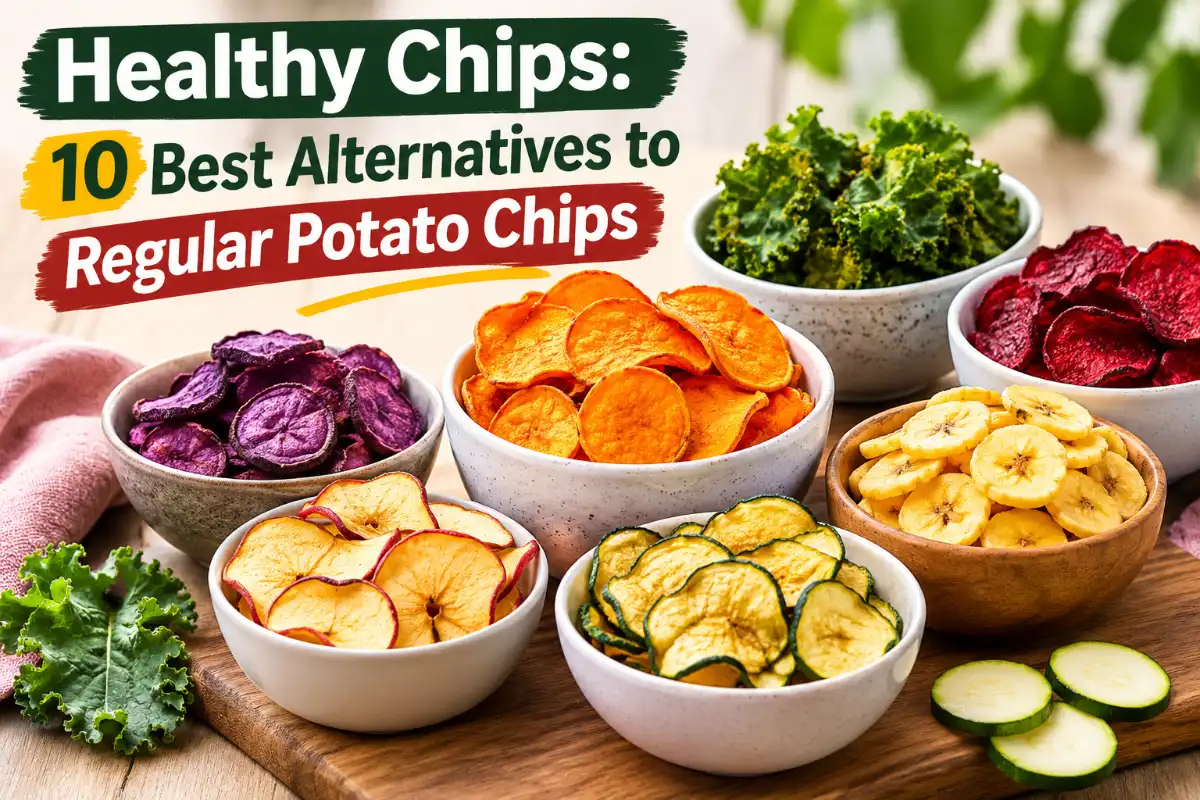
Healthy chips can provide you with the same salty/crunchy satisfaction that you get from other types of potato chips, however they may offer more fiber, lower amounts of sodium, and/or a more balanced nutrient profile than most traditional potato chips. There are several types of chips available, such as baked potato chips, lentil chips, chickpea chips, whole grain tortilla chips, and home made vegetable chips. However, what makes one type of chip “healthier” than another will depend on the ingredients used to make them, how the chips were prepared (i.e., baked vs fried), the amount of chips per serving, and the information provided on the nutritional label – not just if the packaging claims that the chips are “natural” or “veggie.”
You can still include chips in your diet while eating healthily. Select low-sodium chips, keep an eye on how much you are consuming and swap out chips every once in awhile for some roasted chickpeas or air-popped popcorn to help increase your nutrient intake during snacks, yet continue to satisfy your need for that “crunch” factor.
What Makes Chips Healthy?
Chips differ in their nutritional content. Some contain both fiber and protein, whereas others consist primarily of refined starch, added fats, and sodium.
When shopping, focus on these factors:
Sodium: Compare products and choose lower-sodium varieties when possible.
Saturated fat: Look for chips with less saturated fat per serving.
Fiber: Refined starch chips may contain less fiber than whole grains, beans and lentils.
Protein: Legume-based chips sometimes offer additional protein.
Ingredients: Rely on the ingredient label to determine exactly what ingredients the chips contain. Do not rely on front-of-pack claims.
Serving size: A large bag may contain several servings.
The FDA’s Nutrition Facts Label Guidance states that any nutrient level that represents 5 percent of the daily value (DV), or less than 5 percent of the DV, is considered low. Conversely, any nutrient level that represents 20 percent of the DV, or more than 20 percent of the DV, is considered high.
For sodium and saturated fat, generally speaking, lower percentages of these two nutrients are usually better. On the other hand, for dietary fiber, the greater the percentage of this nutrient is usually a positive thing.
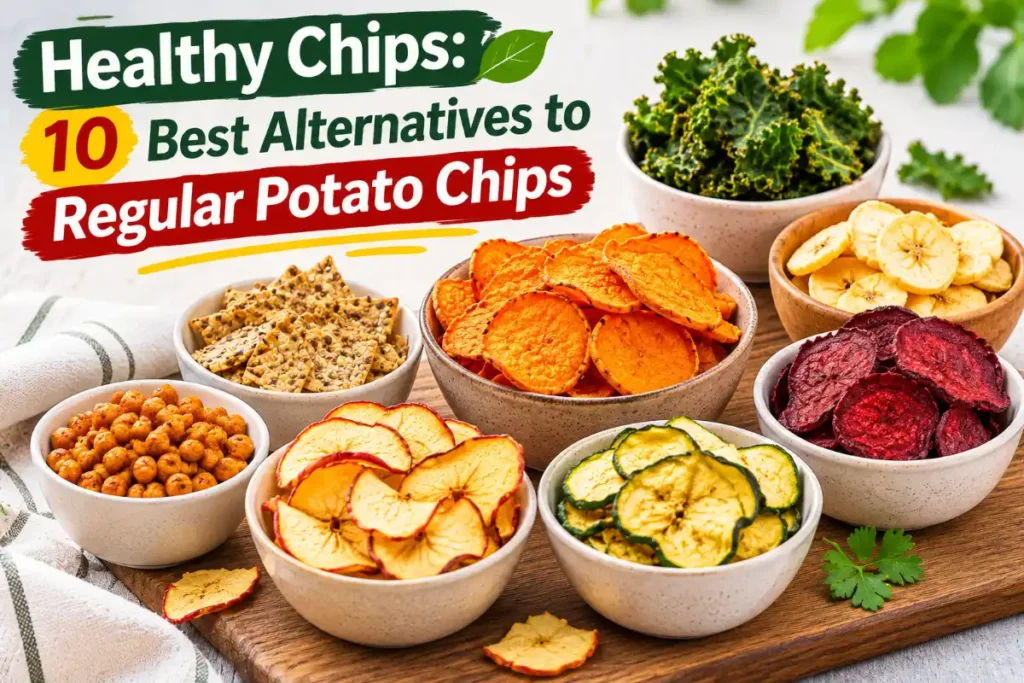
10 Healthy Chips and Crunchy Alternatives Worth Trying
Each option has various nutritional benefits. Your preparation of the food and any other ingredients you add will determine how healthy the food is.
Baked Potato Chips
The use of baked potato chips as a potential substitute for conventional, deep-fat-fried potato chips is an option that has merit if the product is formulated with reduced amounts of total and saturated fats.
They give you that same potato taste and crunchiness, but they don’t have to be deep fried.
Baked chips are not necessarily low-calorie or low-sodium. Many contain a lot of sodium and/or refined starches. Therefore, read the nutritional information on each product’s label to determine if it is suitable for you.
To make your own, slice the potatoes thin, lightly coat with olive oil, then bake until crisp.
Sweet Potato Chips
Sweet potatoes naturally have beta-carotene that the body converts to vitamin A.
Homemade sweet potato chips can make for a delicious treat when made using very little oil and salt.
Thin slices are better suited for even cooking. Because of the high amount of natural sugars in thin slices, it is important to pay close attention to them while they bake so that you do not burn them.
The fact that sweet potato chips are packaged as “sweet potato” doesn’t mean they’re better for you than traditional potato chips, since both can have about the same amount of fat and sodium.
Lentil Chips
Lentil chips are often marketed as protein-rich alternatives to potato chips.
When compared to traditional chips, products containing a significant quantity of lentil flour can offer additional protein and dietary fiber. It is important to note that different manufacturers utilize varying recipe formulations.
Refined starches, added oils and/or large amounts of sodium may be found in some lentil chip products.
Check the label on the food item for the ingredient list and the Nutrition Facts panel to determine if the food provides you with a significant nutritional benefit.
Chickpea Chips
Chickpea based chips are a good option for those looking to eat plant based snacks.
The natural composition of chickpea includes both protein and fiber, but during the processing of these ingredients their nutrient profiles may be altered.
Search out options that have chickpea flour on the label as one of the top few ingredients, as well as being low in sodium.
If you’re looking for a different kind of snack that has some crunch to it, you may want to try using roasted whole chickpeas. You can season them with paprika, garlic powder or other spices to give them flavor.
Whole-Grain Tortilla Chips
Whole grain tortilla chips may have a higher amount of fiber than some of the other refined corn or refined flour based snacks.
Variety is key when choosing whole grain options, and be aware of sodium levels and saturated fats.
Freshly made salsa, or even hummus, when paired with tortilla chips provides a tasty treat that also adds both flavor and nutritional value to your diet.
American Heart Association has recommended to use lower sodium baked tortilla chips instead of fried ones when making healthy food choices.
Kale Chips
Kale chips are made by roasting or baking kale leaves until they become crisp.
The nutritional value of kale chips is dependent upon both how you cook them and what you add to them.
To create your own homemade version, rinse and dry the leaves completely, take out any firm stem parts, and then gently coat with some olive oil.
Bake at a low temperature until crisp, watching carefully to prevent burning.
Beet Chips
Beet chips have a naturally earthy flavor and appealing color.
Beet chips, made with minimal processing, are a unique alternative to standard snack foods because of the folate and other nutritional components found in beets.
However, packaged beet chips can still contain considerable oil and sodium.
Homemade versions allow you to control the seasoning and amount of oil used.
Zucchini Chips
Zucchini can be sliced thinly and baked or air fried into a crispy snack.
Due to the high water content of zucchini, drying the slices prior to cooking will help enhance the quality of its texture.
Seasoning with herbs, black pepper, and/or a little bit of parmesan cheese can be done at this time.
You may want to consider including zucchini chips as part of your overall vegetable consumption. However, depending upon the method of preparation, the nutritional value of zucchini chips can vary greatly.
Bean-Based Chips
Many types of bean-based chips (black beans, etc.) can provide more protein and/or fiber than traditional chips.
However, not all products that are advertised as being made from beans (i.e. bean chips) contain enough of the bean ingredient to offer any substantial nutritional benefit.
When comparing products with comparable serving sizes, take into consideration how much sodium is present in each product, what the fiber content is for each product, and the amount of saturated fat found in each product.
People who want to eat plant-based foods can find bean based snack alternatives especially attractive.
Air-Popped Popcorn
Popcorn isn’t really a “chip,” but it does offer the same satisfying crunch that you’d find in chips. It’s also an excellent substitute for chips.
It’s a whole-grain food that naturally provides dietary fiber.
According to the U.S. Department of Agriculture (USDA) popcorn nutrition guide, three cups of air popped popcorn will have about 100 calories prior to being topped with anything.
The best way to enhance the flavor of your food is to use herbs, smoked paprika, or a splash of olive oil in place of excessive butter and salt.
Healthy Chips Comparison: Which Should You Choose?
Different chips suit different preferences and nutritional goals.
Snack option
Potential advantage
What to check
Baked potato chips
May contain less fat than fried versions
Sodium and serving size
Sweet potato chips
Made from a beta-carotene-rich vegetable
Added oil and salt
Lentil chips
May provide additional protein and fiber
Actual lentil content
Chickpea chips
Plant-based protein and fiber potential
Refined starches and sodium
Whole-grain tortilla chips
Whole-grain ingredients
Fiber and saturated fat
Kale chips
Vegetable-based snack
Added oil and seasoning
Beet chips
Vegetable-based alternative
Sodium and oil
Zucchini chips
Useful homemade vegetable option
Cooking method
Bean-based chips
Potential protein and fiber
Ingredient proportions
Air-popped popcorn
Whole grain and fiber
Butter, salt, and toppings
These are general features of products and not a standard way to measure their nutritional value. You should always read the product label for more specific details about each item.
Are Baked Chips Healthier Than Fried Chips?
Baked chips may contain less fat than fried chips, however, they are not necessarily better for you overall.
The same level of sodium can be found in some baked products, while some baked products may also have added refined starches. The number of calories in some baked products is only slightly less than those of the same product when it is fried.
Although there are some recipes that may allow you to use less oil when you air-fry food than when you deep-fry, this will vary depending upon what type of recipe you choose.
To make the most accurate comparison, you need to consider all of these factors at once: calories, saturated fat, sodium, fiber and how large your serving is.
How to Choose Healthy Chips at the Grocery Store
A few quick label checks can make shopping easier.
To begin, make comparisons between serving sizes. A product with less sodium per serving does not always mean it will have less sodium than another product with a larger serving size.
Then check the fiber content, saturated fat, and ingredients.
The Food and Drug Administration (FDA) suggests people who want to lower their sodium consumption take note of the Daily Value percentage of a product since many snack foods that are salty have a great impact on how much sodium is consumed.
FDA
Don’t assume that because a product is labeled “organic,” “gluten-free,” “vegetable-based,” or “baked” it will be more nutritious than other products. These labels simply indicate certain attributes of a product and do not represent the total nutritional value of that product.
How to Make Healthy Chips at Home
Homemade chips allow you to have more control of how much oil you use, the amount of salt used, what goes into making the chips, and the size of your portions.
A simple preparation method works for many vegetables:
Wash and dry the vegetables thoroughly.
Slice them thinly and evenly.
Toss with a small amount of olive oil.
Add herbs or spices for flavor.
Arrange the slices in a single layer.
Bake or air-fry until crisp, adjusting the cooking time to the vegetable.
Because each vegetable (potatoes, sweet potatoes, zucchini, and kale) requires a different temperature and time to cook properly, it is important to adjust your cooking settings accordingly. Additionally, you should be aware that thin cuts of these vegetables can burn rapidly, so keep an eye on them during the entire cooking process.
Homemade potato chips are most beneficial to you if they are consumed with other foods that contribute to a balanced diet, instead of replacing all of your fresh vegetables.
Can You Eat Chips While Trying to Lose Weight?
Yes, chips can be included in a weight loss/management diet as long as the portion sizes and total caloric intake are within acceptable limits.
If you find it difficult to stop eating your favorite snacks altogether, then take out only one serving of those snacks and place them into a small bowl rather than taking the whole big bag and eating from that.
A small amount of potato chips combined with either hummus, Greek yogurt dip, or fresh vegetables can increase the level of satisfaction from eating this type of snack.
The American Heart Association’s suggested healthy snack options include roasted chickpeas, air popped popcorn, whole grain crackers and raw/unsalted nuts.
A person’s entire diet is not determined by the type of snacks they eat. Overall eating habits are more important than occasionally consuming potato chips.
Read also: What to Eat: A Simple Guide to Healthy Foods and Balanced Meals
Frequently Asked Questions
1. What are the healthiest chips to eat?
Good options include lower-sodium baked potato chips, whole-grain tortilla chips, and lentil or chickpea chips with meaningful fiber content. Homemade vegetable chips can also be nutritious. The healthiest product depends on its ingredients, nutrition label, and portion size.
2. Are veggie chips healthier than potato chips?
Not necessarily. Some packaged veggie chips are made primarily from potato starch, refined flour, or vegetable powders. They may contain similar amounts of fat and sodium to regular potato chips. Compare nutrition labels rather than relying on the word veggie.
3. Are healthy chips good for weight loss?
They can fit into a weight-loss diet, but portion size still matters. Choosing chips with less saturated fat or more fiber may improve snack quality, although overall calorie intake remains important for weight management.
4. Are air-fried chips healthier than deep-fried chips?
Air-fried chips often require less added oil than deep-fried chips. However, their nutritional value also depends on the ingredients, salt, serving size, and cooking method. Air frying doesn’t automatically make every chip healthy.
5. Can I eat chips every day?
A modest serving of chips can fit into a balanced diet, but it’s sensible to vary your snacks. Vegetables, fruit, nuts, yogurt, roasted chickpeas, and whole-grain foods provide nutrients that many packaged chips lack.
