
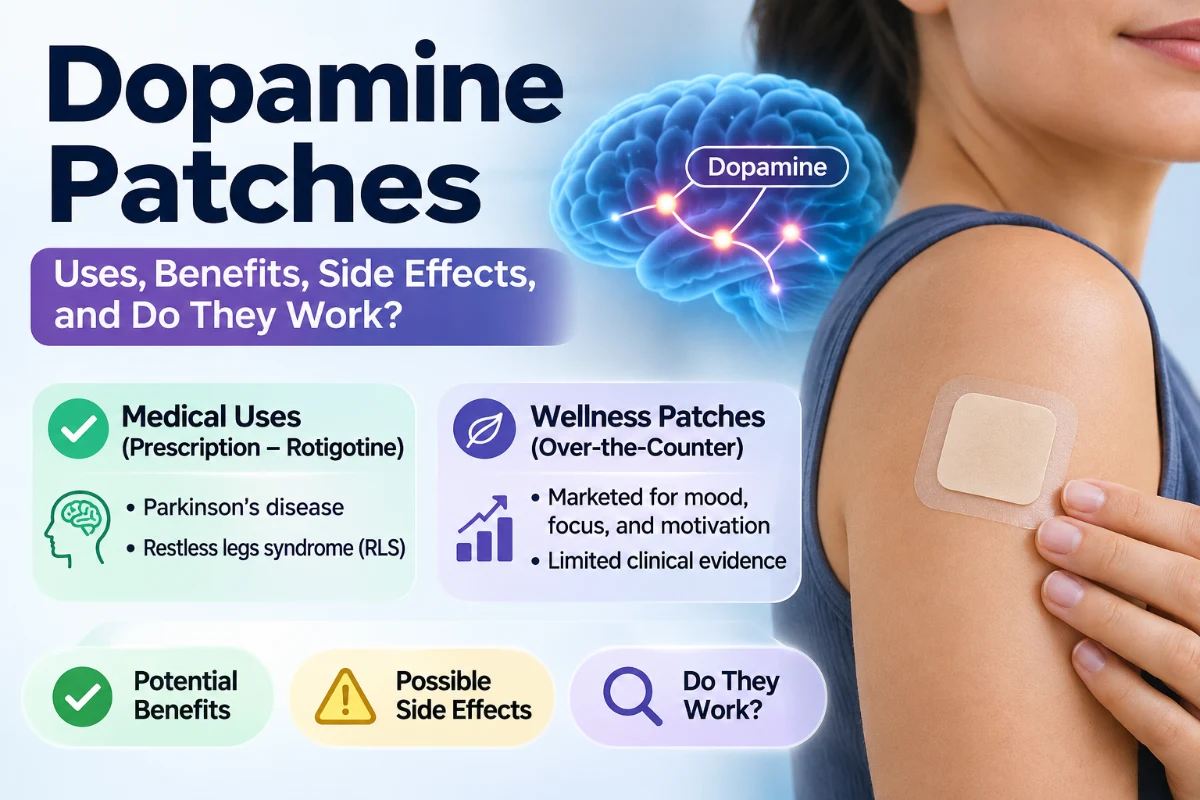
Dopamine patches are adhesive skin patches marketed to influence dopamine-related functions, but not all are medically proven treatments. Prescription patches containing rotigotine, such as Neupro, stimulate dopamine receptors and are used to manage Parkinson’s disease and moderate-to-severe restless legs syndrome. Over-the-counter wellness patches advertised for better mood, motivation, energy, or focus are different products. There is insufficient reliable clinical evidence that these consumer patches increase dopamine levels or deliver their promised benefits.
The distinction matters. Prescription medications must undergo clinical testing and regulatory review, while many wellness products make claims that have not been adequately supported by human studies. Understanding how each type works can help you evaluate its potential benefits, limitations, and safety risks.
What Are Dopamine Patches?
Dopamine is a chemical messenger, also called a neurotransmitter, that helps regulate movement, motivation, learning, reward, and several other functions of the nervous system.
The term dopamine patch generally refers to two different types of products:
- Prescription dopamine agonist patches: Medicated patches containing rotigotine, which activates dopamine receptors to help manage symptoms of certain neurological conditions.
- Over-the-counter wellness patches: Adhesive products that may contain vitamins, botanical extracts, or amino acid-related ingredients. They are marketed to support concentration, mood, or motivation.
Although both products are applied to the skin, they should not be considered interchangeable.
Prescription rotigotine patches have established medical uses supported by clinical research. In contrast, consumer products promoted as dopamine boosters have not demonstrated comparable clinical effectiveness.
How Do Dopamine Patches Work?
Prescription rotigotine patches deliver medication through the skin and into the bloodstream continuously over approximately 24 hours. Once absorbed, rotigotine activates dopamine receptors in the nervous system, helping reduce symptoms associated with impaired dopamine signaling.
Despite their name, these patches do not contain dopamine itself. Rotigotine belongs to a group of medications called dopamine agonists, which mimic certain effects of naturally occurring dopamine.
Wellness patches work on a different claimed principle. Manufacturers may suggest that ingredients absorbed through the skin help support dopamine production, improve mental clarity, or regulate mood.
However, an ingredient producing biological effects when swallowed does not automatically mean it will have the same effect when applied through a patch.
For a transdermal product to be effective, its ingredients must penetrate the skin and reach the body in sufficient amounts to produce the intended result. That has not been convincingly established for many consumer dopamine wellness patches.
Medical Uses and Potential Benefits of Dopamine Patches
Parkinson’s Disease
Prescription rotigotine patches are approved by the U.S. Food and Drug Administration (FDA) for treating symptoms of Parkinson’s disease.
Parkinson’s disease is a progressive neurological condition that affects movement. Common symptoms include tremors, muscle stiffness, slowed movements, and difficulty maintaining balance or coordination.
Rotigotine helps by stimulating dopamine receptors, allowing patients to manage certain movement-related symptoms. Its continuous delivery may also be useful for people who benefit from medication administered through the skin rather than multiple oral doses.
However, rotigotine does not cure Parkinson’s disease or prevent the condition from progressing.
Treatment decisions depend on the person’s symptoms, disease stage, existing medications, and potential side effects. The prescribing clinician must weigh these factors before recommending a dopamine agonist.
Restless Legs Syndrome
Rotigotine is also FDA-approved for moderate-to-severe primary restless legs syndrome (RLS).
RLS causes unpleasant sensations in the legs and an overwhelming urge to move them. Symptoms are often more noticeable during periods of inactivity, particularly in the evening or at night.
Rotigotine can reduce these symptoms in some patients. However, long-term treatment with dopamine agonists carries a risk known as augmentation.
Augmentation occurs when restless legs symptoms begin earlier in the day, become more severe, or spread to other parts of the body. In some cases, symptoms become more difficult to control than they were before treatment.
Because of these concerns, rotigotine is not necessarily the best initial treatment for everyone with RLS.
The 2025 American Academy of Sleep Medicine clinical practice guideline suggests against the routine use of transdermal rotigotine for adults with RLS because of the potential for long-term complications, particularly augmentation. It may still be appropriate for selected patients after discussing the benefits and risks.
Treatment choices should reflect the patient’s medical history, symptom severity, and individual needs.
Mood, Focus, and Motivation
Consumer wellness patches are commonly marketed as simple ways to improve concentration, increase motivation, support emotional balance, or reduce feelings of mental fatigue.
These claims may sound appealing, especially to people looking for alternatives to supplements or other products taken by mouth.
Unfortunately, there is insufficient clinical evidence showing that commercially marketed dopamine wellness patches reliably increase brain dopamine levels or improve these functions.
A September 2, 2026, ruling by the UK’s Advertising Standards Authority upheld complaints about advertising claims for a commercial dopamine patch. The regulator found that the advertiser had not provided adequate evidence to support the claimed benefits. Research involving individual ingredients taken orally did not establish that those ingredients would work effectively through a skin patch.
This ruling does not prove that every wellness patch is ineffective, but it highlights why marketing claims should be evaluated carefully.
People experiencing persistent low mood, difficulty concentrating, or unexplained fatigue should seek a clinical evaluation rather than assume their symptoms indicate low dopamine.
A primary care physician or internal medicine doctor can assess possible medical causes and determine whether additional testing or specialist care is appropriate.
Prescription vs. Wellness Dopamine Patches
| Feature | Prescription rotigotine patch | OTC dopamine wellness patch |
| Main purpose | Treat specific neurological conditions | Marketed for mood, energy, or focus |
| Active ingredients | Rotigotine | Varies; may include vitamins or botanical extracts |
| How it works | Stimulates dopamine receptors | Advertised mechanisms and effects are not adequately established |
| FDA-approved medical uses | Parkinson’s disease and moderate-to-severe primary RLS | No established FDA-approved uses for treating dopamine-related conditions |
| Prescription required | Yes | Generally no |
| Evidence | Clinical trials support approved uses | Limited or insufficient evidence for advertised benefits |
The important difference is not simply whether a patch contains medication or natural ingredients. It is whether the finished product has been adequately tested for its intended purpose.
Prescription rotigotine has demonstrated benefits for specific conditions, while consumer wellness patches generally lack comparable clinical evidence.
Dopamine Patches Side Effects and Risks
Prescription rotigotine can cause side effects, even when patients follow their treatment instructions correctly.
Common adverse effects include:
- Nausea or vomiting
- Skin redness, itching, or irritation
- Dizziness or lightheadedness
- Drowsiness and sleep disturbances
- Headaches
- Swelling of the feet or ankles
Some patients may experience more serious complications, including sudden episodes of falling asleep, hallucinations, low blood pressure when standing, or unusual changes in behavior.
One particularly important concern involves impulse-control disorders.
People taking dopamine agonists may develop powerful urges to gamble, shop excessively, overeat, or engage in compulsive sexual behavior. These behaviors can appear even in individuals without a previous history of such problems.
Patients may not immediately recognize these changes. Family members and caregivers should therefore remain alert to unusual behavior during treatment.
The official Neupro prescribing information describes these risks and includes warnings about sleep attacks, hallucinations, impulse-control problems, and other potentially serious reactions.
Contact your healthcare professional promptly if you experience sudden sleep episodes, hallucinations, or unexpected behavioral changes.
Severe allergic symptoms, such as difficulty breathing or swelling of the throat, require immediate emergency medical attention.
Over-the-counter wellness patches may also cause itching, redness, or allergic skin reactions. Depending on their ingredients, other adverse effects or medication interactions may be possible.
Being available without a prescription does not automatically make a product safe or effective.
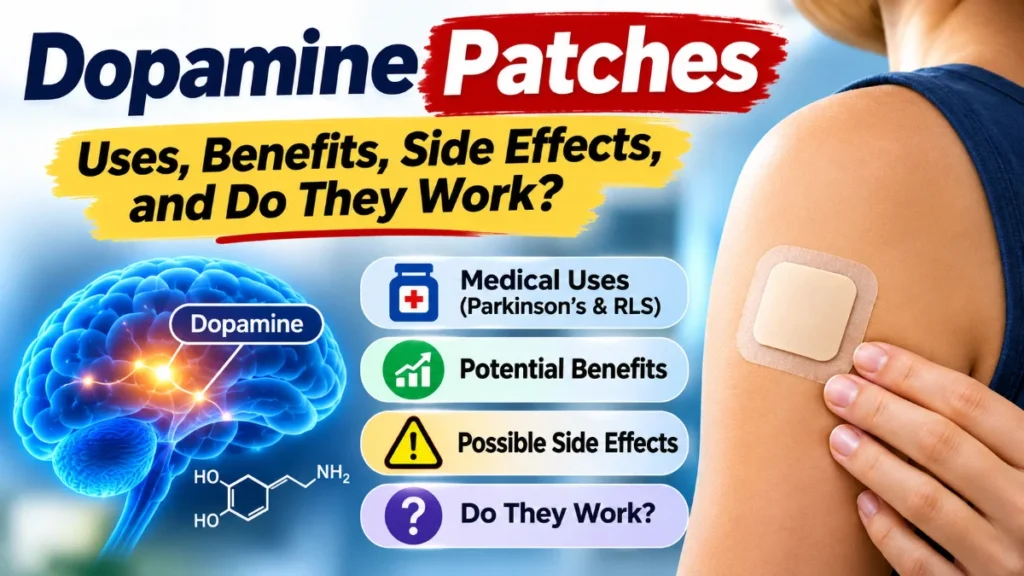
How to Use Prescription Dopamine Patches Safely
Rotigotine patches are generally applied once daily, following the dosage and instructions provided by the prescribing healthcare professional.
Proper application matters because incorrect use may affect medication delivery or increase the likelihood of unwanted reactions.
Important precautions include:
- Apply the patch to clean, dry skin. Suitable areas include the abdomen, thigh, hip, shoulder, upper arm, or side of the body. Avoid irritated, damaged, or excessively oily skin.
- Rotate application sites. Use a different area each day and avoid applying another patch to the same location within 14 days.
- Replace the patch as directed. Remove the previous patch before applying a new one. Follow the prescribed schedule and avoid wearing more patches than instructed.
- Avoid direct heat. Heating pads, electric blankets, saunas, hot tubs, and prolonged direct sunlight may increase medication absorption and affect its safety.
- Never cut the patch. Cutting or damaging the patch can interfere with the way the medication is delivered.
Rotigotine patches must also be removed before magnetic resonance imaging (MRI) scans or cardioversion. Their backing contains aluminum, which can cause skin burns during these procedures.
Always inform your healthcare team that you use a medicated skin patch before undergoing medical tests or procedures.
Another important precaution involves stopping treatment. Rotigotine should not be discontinued suddenly without medical supervision. Abrupt withdrawal or rapid dose reduction can cause significant symptoms, and a healthcare professional may need to taper the medication gradually.
For complete application instructions and additional precautions, consult the rotigotine medication guidance from MedlinePlus, a service of the U.S. National Library of Medicine.
Do Dopamine Patches Really Work?
The answer depends on which type of patch you are considering.
Prescription rotigotine patches have demonstrated effectiveness for their FDA-approved indications. Clinical trials support their use in managing Parkinson’s disease symptoms and moderate-to-severe primary restless legs syndrome.
However, effectiveness does not mean every patient will experience the same results.
Some people benefit from rotigotine, while others may experience side effects or respond better to different treatments. For restless legs syndrome in particular, current clinical guidelines emphasize the importance of considering long-term complications before choosing dopamine agonists.
The evidence for consumer wellness patches is considerably weaker.
There is no convincing clinical basis for assuming that products advertised as dopamine boosters can reliably increase dopamine levels in the brain, treat attention-deficit/hyperactivity disorder (ADHD), or improve motivation and concentration.
Claims about these products should not be confused with the established medical benefits of prescription dopamine agonists.
The clinical evidence supporting rotigotine applies to the medication itself, its tested delivery system, and its approved indications. Those findings cannot automatically be extended to unrelated wellness patches.
For anyone considering a dopamine-related patch, the safest approach is to distinguish approved medical treatments from products supported primarily by promotional claims.
Frequently Asked Questions
1. Can dopamine patches increase dopamine levels in the brain?
Prescription rotigotine patches activate dopamine receptors rather than directly increasing dopamine production. Consumer wellness patches may claim to boost dopamine, but there is insufficient reliable clinical evidence that they consistently increase dopamine levels in the brain.
2. Can you buy dopamine patches without a prescription?
You can purchase some products marketed as dopamine wellness patches without a prescription. However, prescription rotigotine patches, including Neupro, require authorization from a healthcare professional in the United States. OTC wellness products are not equivalent to FDA-approved dopamine agonist medications.
3. Are dopamine patches safe for everyday use?
Prescription rotigotine patches are designed for daily use when prescribed and monitored by a healthcare professional. They can still cause side effects, including drowsiness, low blood pressure, and compulsive behaviors. The safety of wellness patches depends on their ingredients and formulation, and long-term safety data may be limited.
4. Do dopamine patches help with ADHD?
Prescription rotigotine is not FDA-approved for treating ADHD. There is also insufficient reliable clinical evidence that consumer dopamine wellness patches improve ADHD symptoms. People experiencing attention-related difficulties should seek professional assessment and discuss evidence-based treatment options.
5. How long does a dopamine patch take to work?
Prescription rotigotine patches release medication continuously over approximately 24 hours, but noticeable symptom improvement can take longer. Some patients may need several weeks and appropriate dose adjustments to experience the full benefit. For OTC wellness patches, there is insufficient reliable evidence to establish how quickly their advertised effects occur.
