
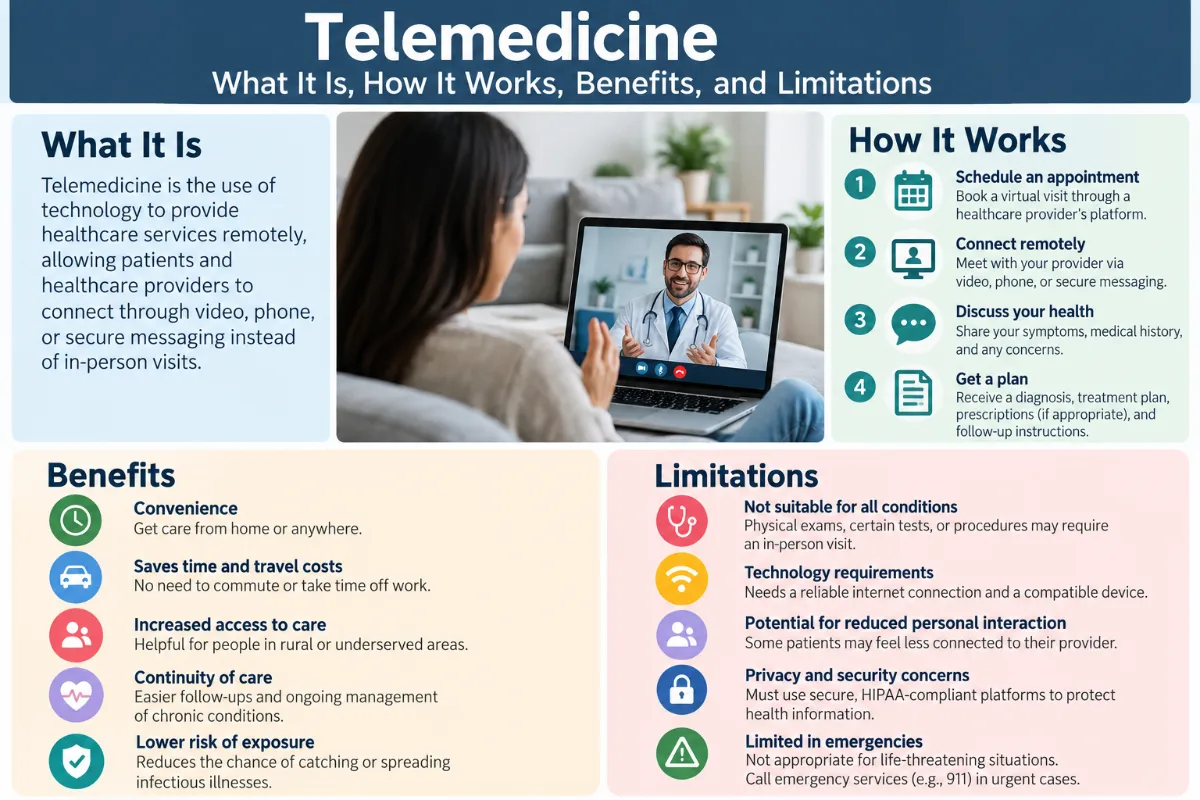
Telemedicine is the delivery of clinical healthcare services remotely through video calls, telephone consultations, and secure digital communication. It lets patients speak with licensed healthcare professionals, discuss symptoms, receive medical advice, manage ongoing conditions, and obtain prescriptions when clinically appropriate and legally permitted. However, virtual healthcare cannot replace every physical examination, medical test, or emergency treatment.
People commonly use telemedicine for routine consultations, follow-up appointments, mental health care, and chronic disease management. Whether it’s the right choice depends on the medical concern, the healthcare provider’s assessment, and applicable regulations.
How Does Telemedicine Work?
A virtual medical appointment works much like an in-person visit, except you communicate with your healthcare professional remotely. You can discuss symptoms, ask questions, and receive treatment recommendations without traveling to a clinic.
Here’s what the process usually involves:
- Book an appointment: Schedule a consultation through your healthcare provider’s website, patient portal, or telephone service.
- Prepare for the visit: Have your medical history, current medications, and questions ready. If you’re using video, check your internet connection, camera, and microphone beforehand.
- Join the consultation: Connect with your healthcare professional at the scheduled time using the provided instructions.
- Receive a medical assessment: The clinician asks about your symptoms, reviews relevant medical information, and determines what can be evaluated remotely.
- Arrange follow-up care: You may receive treatment advice, a prescription, test orders, or instructions to schedule an in-person appointment.
The appointment itself may be brief or involve a more detailed discussion, depending on your symptoms and medical history. For a smoother experience, follow these official telehealth appointment preparation guidelines.
Types of Telemedicine Consultations
Virtual healthcare generally uses three communication methods, each suited to different patient needs.
- Live video visits: You speak face-to-face with a healthcare professional through a secure video connection. This can help the clinician observe visible symptoms and discuss your concerns.
- Telephone consultations: Audio-only appointments let you receive medical advice without a camera or video connection. They may be useful when internet access is limited.
- Asynchronous communication: You send messages, photographs, or medical information through a secure platform, and a clinician reviews them later.
Not every method works for every condition. Some concerns can be handled through a phone call, while others require video, diagnostic testing, or a physical examination.
What Medical Services Are Available Through Telemedicine?
An online doctor consultation can help with many non-emergency healthcare needs. Some of the most common uses include:
- Routine consultations: Discussing mild respiratory symptoms, allergies, minor skin concerns, and other conditions that may be suitable for remote assessment.
- Follow-up appointments: Reviewing test results, checking recovery progress, or discussing how well a treatment is working.
- Mental health care: Receiving counseling, psychiatric evaluations, or medication-management services when appropriate.
- Chronic disease management: Monitoring conditions such as diabetes, asthma, and high blood pressure, sometimes using measurements collected at home.
- Medication reviews: Discussing prescriptions, possible side effects, and whether treatment adjustments are necessary.
Healthcare professionals can also recommend laboratory tests, imaging, or specialist appointments based on what they learn during a consultation.
Some symptoms still require hands-on examination. For example, a clinician cannot physically examine your abdomen or collect a blood sample through a video call. Even visible concerns, such as a swollen uvula, may require an in-person assessment, particularly when throat swelling affects breathing or swallowing.
Telemedicine Benefits and Disadvantages
Convenience is one of the biggest advantages of remote healthcare, especially for patients who live far from medical facilities or have difficulty traveling. Still, virtual care comes with limitations worth understanding before booking an appointment.
| Potential benefit | Limitation or consideration |
| Less travel and time away from daily activities | Some conditions require an in-person examination |
| Easier access to certain healthcare professionals | Availability varies by specialty and location |
| Convenient follow-up for ongoing conditions | Additional tests or examinations may still be needed |
| Access to care from home or another suitable location | Internet or device problems can interrupt appointments |
| Potential savings on transportation | Consultation fees and insurance costs may still apply |
Remote appointments can be particularly useful for people with mobility difficulties, those living in rural communities, and patients who need regular monitoring.
For example, someone managing high blood pressure may be able to discuss home blood pressure readings with their clinician rather than traveling to an office for every follow-up.
That doesn’t mean virtual appointments are always cheaper or equally effective for every condition. The benefits depend on your medical needs, the quality of the assessment, and whether your condition can be evaluated safely without an in-person examination.
Is Telemedicine Safe, and When Is In-Person Care Necessary?
Telemedicine can be a safe and effective way to receive medical care when a remote assessment is appropriate for your condition. Its effectiveness depends on the symptoms involved, the information available to your clinician, and whether a physical examination or diagnostic testing is necessary.
Before choosing a virtual healthcare service, verify that the professional is properly licensed and authorized to treat patients where you are located. In the United States, requirements for providing telehealth services across state lines vary by state.
Protecting your medical information is equally important. Use a trusted patient portal or communication platform, choose strong passwords, and attend appointments somewhere private whenever possible.
You should also avoid sharing sensitive health information through unfamiliar websites or unsecured messaging services. Following recommended telehealth privacy practices can help reduce the risk of unauthorized access to your personal information.
When Should You Seek In-Person Medical Care?
An in-person appointment may be necessary when symptoms require physical examination, imaging, laboratory testing, or procedures that cannot be performed remotely.
Medical emergencies should never be handled through a routine virtual appointment. Severe chest pain, serious breathing difficulties, stroke symptoms, and uncontrolled bleeding require immediate emergency medical attention. In the United States, call 911 for life-threatening emergencies.
If your clinician believes a remote assessment isn’t sufficient, they may recommend visiting a clinic, urgent care center, or emergency department.
Can Online Doctors Prescribe Medication?
Yes. Licensed healthcare professionals can prescribe medications during virtual consultations when doing so is medically appropriate and legally permitted.
A clinician may renew an existing prescription, adjust ongoing treatment, or recommend a new medication after evaluating your condition.
However, receiving an online consultation doesn’t automatically mean you’ll receive a prescription. Your healthcare professional must decide whether medication is necessary and whether additional testing or an in-person examination is required.
Some medications, particularly controlled substances, face additional legal restrictions in the United States. Federal telemedicine controlled-substance prescribing rules include temporary flexibilities scheduled to continue through December 31, 2026, subject to specific requirements and applicable state laws.
If prescription access is your main reason for booking, ask the provider about medication eligibility and restrictions before scheduling.

How Much Does Telemedicine Cost, and Does Insurance Cover It?
Telemedicine costs vary according to the healthcare provider, type of appointment, insurance plan, and location. There isn’t one standard consultation fee across the United States.
Here’s how the main payment options generally work:
- Medicare: Medicare Part B covers eligible virtual healthcare services. After meeting the applicable deductible, patients generally pay 20% of the Medicare-approved amount, although specific cost-sharing rules can differ. You can check the current Medicare telehealth coverage details to understand which services qualify.
- Medicaid: Coverage depends on your state’s program, the services provided, and eligibility requirements. States have considerable flexibility in determining how telehealth services are covered.
- Private health insurance: Many insurance plans cover certain virtual appointments, but copays, deductibles, provider networks, and coverage restrictions vary.
- Self-pay appointments: Patients without applicable insurance coverage can use providers offering direct-payment consultations. Prices depend on the service and healthcare professional.
Before scheduling, confirm that your provider accepts your insurance and ask whether the appointment involves a copay, deductible, or additional fee.
For Medicaid patients, the official Medicaid telehealth guidance explains how states determine coverage and reimbursement.
Outside the United States, virtual healthcare costs, insurance arrangements, and prescribing regulations depend on local healthcare systems.
Telemedicine vs. Telehealth: What’s the Difference?
The main difference between telemedicine and telehealth is the range of services each term describes.
Telemedicine focuses specifically on remote clinical care. This includes appointments where healthcare professionals evaluate symptoms, discuss treatment, manage medication, or provide other medical services.
Telehealth is a broader term that covers remote clinical care alongside services such as patient education, certain administrative healthcare activities, and remote health monitoring.
For example, a video appointment with a physician is telemedicine. An online patient education session may be considered telehealth even when no clinical consultation takes place.
In everyday healthcare conversations, however, the two terms are often used interchangeably.
Frequently Asked Questions
1. What is telemedicine in simple words?
Telemedicine means getting medical care from a healthcare professional without visiting a clinic in person. You can discuss symptoms, receive advice, and arrange treatment through video calls, telephone appointments, or secure online communication. It’s particularly useful for routine consultations and follow-up care.
2. Can telemedicine replace an in-person doctor visit?
It can replace certain appointments, including routine consultations, follow-up visits, and medication reviews. However, some conditions require a physical examination, diagnostic testing, or hands-on treatment. Your healthcare professional will determine whether virtual care is appropriate for your situation.
3. Do I need special equipment for a telemedicine appointment?
Most video appointments require a smartphone, tablet, or computer with a camera, microphone, and reliable internet connection. If your provider offers telephone consultations, a working phone may be enough. Check the appointment instructions beforehand so you know what equipment you’ll need.
4. Can I use telemedicine without health insurance?
Yes. Many healthcare providers offer virtual consultations that patients can pay for directly without insurance. Prices vary, so ask about the consultation fee before booking. It’s also worth checking whether prescriptions, laboratory tests, or follow-up appointments will involve additional charges.
5. Is telemedicine available 24 hours a day?
Some virtual healthcare services provide appointments around the clock, but not every provider offers 24/7 availability. Many clinics schedule online consultations during their regular business hours. If you’re experiencing a medical emergency, seek immediate emergency care rather than waiting for a virtual appointment.
