
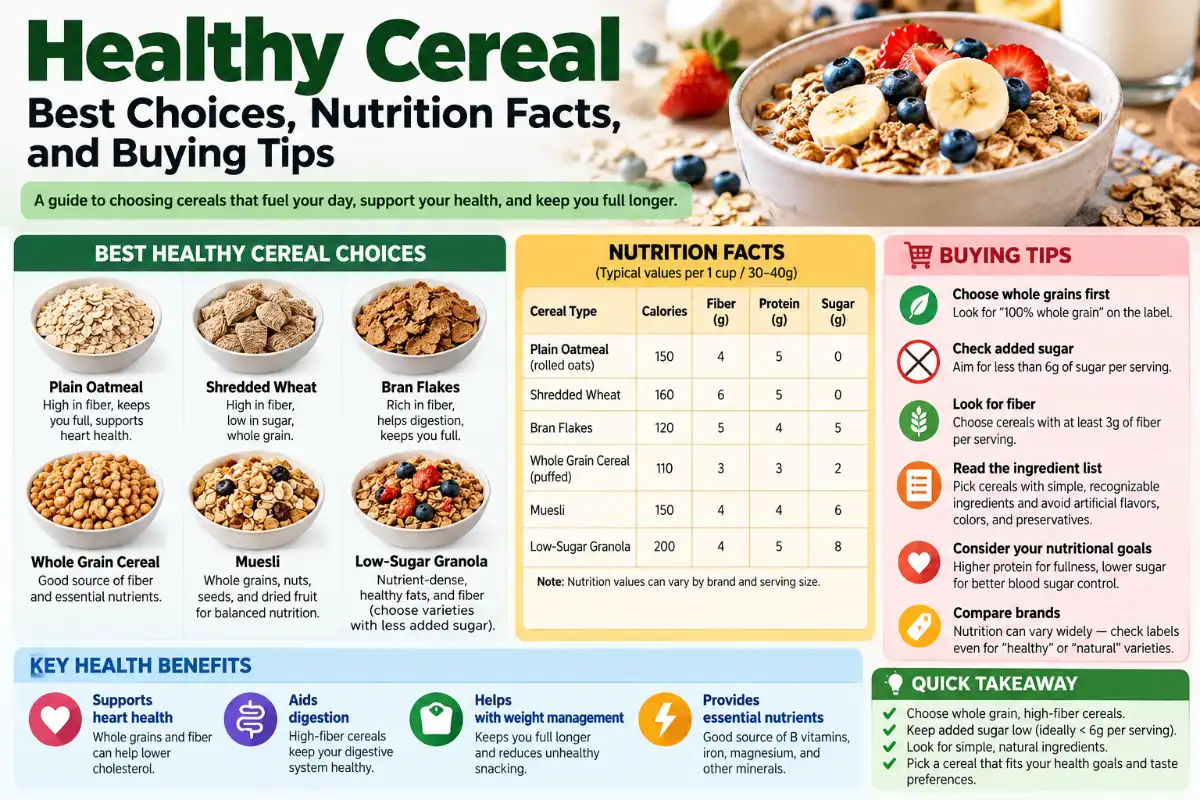
A healthy cereal typically contains whole grains, plenty of fiber, limited added sugar, and enough protein to contribute to a balanced breakfast. When shopping, look for cereals with at least 3–5 grams of fiber and around 6 grams or less of added sugar per serving. These are practical guidelines, not strict nutritional requirements. Reading the ingredient list and checking serving sizes can help you choose a cereal that fits your needs.
Some of the healthiest breakfast cereals include Original Cheerios, Post Shredded Wheat, Grape-Nuts Original, and Fiber One Original Bran. Each has its own advantages, whether you’re looking for less added sugar, more fiber, or a simple whole-grain option. Your ideal choice will depend on your nutritional needs, preferred portion size, and what you eat with your cereal.
What Makes a Breakfast Cereal Healthy?
Not every cereal marketed as nutritious delivers the same benefits. Some products contain considerable added sugar even though their packaging emphasizes whole grains or added vitamins.
A nutritious breakfast cereal generally offers several important qualities:
- Whole grains: Oats, whole wheat, and other whole grains provide fiber and essential nutrients.
- Low added sugar: Around 6 grams or less per serving is a sensible starting point when comparing products.
- High fiber: Look for at least 3–5 grams per serving to support digestive health and help you feel satisfied.
- Adequate protein: A cereal providing 3 grams or more can contribute to your morning protein intake, although some varieties offer considerably more.
- Reasonable sodium: When two cereals have similar nutritional benefits, choosing the lower-sodium option may be worthwhile.
- Appropriate portions: The calories and nutrients you consume depend on how much cereal you actually eat.
These recommendations are consistent with established guidance for choosing nutritious breakfast cereals, which emphasizes whole grains, fiber, protein, and limited added sugar.
A whole grain breakfast cereal that meets several of these criteria can be a convenient addition to your morning routine. Still, no single nutrient determines whether a cereal is healthy overall.
Healthy Cereal Options Worth Considering
The best healthy cereal brands offer products with different nutritional strengths. Instead of relying on marketing claims, compare the actual Nutrition Facts to see which cereal best meets your needs.
The following figures reflect manufacturer-listed nutritional information for US products. They apply to dry cereal without milk or toppings. Ingredients and nutritional values may change, so always check the package before purchasing.
| Cereal | Serving Size | Calories | Added Sugar | Fiber | Protein |
| Original Cheerios | 1½ cups | 140 | 1 g | 4 g | 5 g |
| Post Shredded Wheat Original Big Biscuit | 2 biscuits (51 g) | 170 | 0 g | 7 g | 6 g |
| Post Grape-Nuts Original | ½ cup (58 g) | 200 | 0 g | 7 g | 6 g |
| Fiber One Original Bran | ⅔ cup | 90 | 0 g | 18 g | 3 g |
Because the serving sizes vary, these numbers aren’t direct comparisons of equal quantities.
Low-Sugar and Whole-Grain Choices
Original Cheerios is a practical everyday option made primarily with whole-grain oats. One serving contains 4 grams of fiber and just 1 gram of added sugar. Its mild flavor also pairs easily with fresh fruit, milk, or yogurt.
Post Shredded Wheat Original Big Biscuit is made with whole-grain wheat and contains no added sugar. Each serving provides 7 grams of fiber and 6 grams of protein. It’s a particularly good option for shoppers who prefer straightforward ingredients without added sweetness.
High-Fiber Cereal Options
Grape-Nuts Original delivers 7 grams of fiber and 6 grams of protein per half-cup serving. Its dense, crunchy texture makes it quite different from lighter cereals. Keep its smaller serving size in mind when comparing calories or measuring portions.
Fiber One Original Bran contains 18 grams of fiber per serving, making it an especially high fiber cereal. That’s a substantial amount, particularly if your usual diet is relatively low in fiber. Increasing your intake gradually and drinking enough fluids may help prevent bloating or digestive discomfort.
Protein-Rich Breakfast Cereals
Protein levels vary widely among breakfast cereals. A product advertised as high in protein isn’t necessarily the most nutritious choice, especially if it also contains considerable added sugar or offers little fiber.
Before buying a protein-focused cereal, compare its protein content with its calories, fiber, added sugar, and serving size.
You can also boost the protein in an ordinary whole-grain cereal by adding milk or unsweetened Greek yogurt. This may be a simpler option than buying a specialized high-protein product.
How to Read a Cereal Nutrition Label
Cereal packaging often highlights appealing features such as whole grains, vitamins, or protein. Those claims can be helpful, but they don’t tell you everything about the product.
Start with the Nutrition Facts label and pay attention to these details:
- Serving size: Check how much cereal the listed nutrition information covers, then compare that amount with your usual portion.
- Added sugar: Focus on added sugar rather than total sugar alone. Total sugar can also include naturally occurring sugars.
- Dietary fiber: Around 3–5 grams per serving is a useful benchmark, although some cereals provide much more.
- Ingredients: Look for whole grains, such as whole-grain oats or whole wheat, near the beginning of the ingredient list.
- Protein and sodium: Compare these alongside calories, fiber, and sugar to understand the product’s overall nutritional value.
The Nutrition Facts label and percent Daily Value can also help you compare products. As a general rule, 5% Daily Value (%DV) or less is considered low, while 20% DV or more is considered high for a particular nutrient.
Remember that terms such as multigrain, natural, and protein-rich don’t automatically mean a cereal is low in added sugar or high in fiber.
How to Make Your Cereal Breakfast More Balanced
Even a nutritious cereal may not provide everything you want from breakfast. Adding a few complementary foods can improve the meal’s nutritional balance without making it complicated.
Consider these combinations:
- Cereal with milk: Provides additional protein and other nutrients, depending on the milk you choose.
- Cereal with unsweetened Greek yogurt: Adds protein and gives the cereal a thicker, creamier texture.
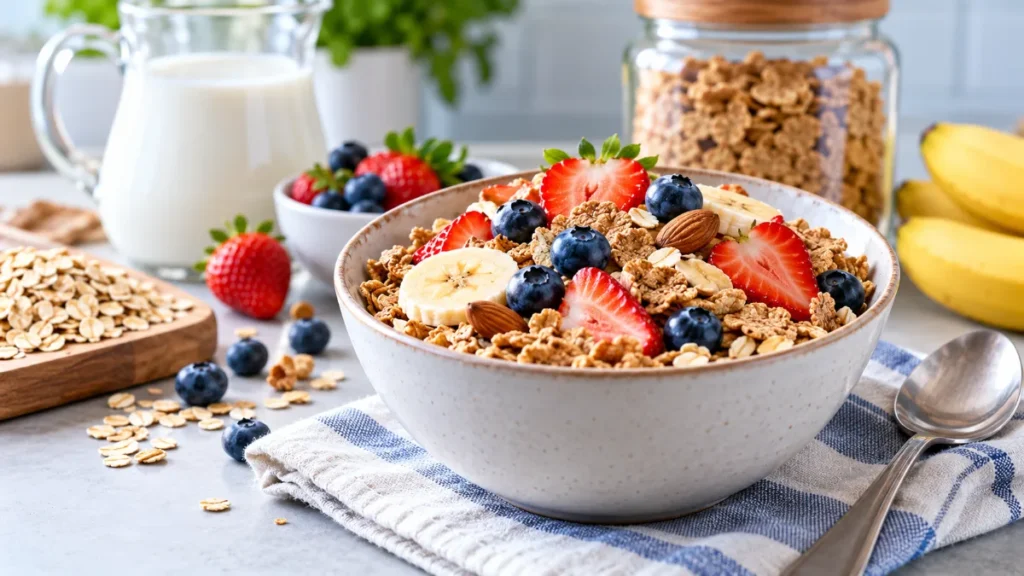
- Cereal with berries: Brings natural sweetness, fiber, and additional vitamins.
- Cereal with nuts or seeds: Contributes unsaturated fats, some protein, and extra fiber.
For example, a bowl of plain shredded wheat topped with strawberries and walnuts, served with milk, brings together whole grains, fruit, protein, and healthy fats.
If you’re watching your added sugar intake, choose unsweetened toppings when possible. Remember to consider portion sizes, since nuts, seeds, milk, and other additions also contribute calories.
Choosing Cereal for Different Dietary Needs
There’s no single cereal that’s ideal for everyone. Age, appetite, nutritional requirements, and personal health considerations all play a role in determining which product is most suitable.
Healthy Cereal for Kids
For children, focus on cereals with limited added sugar, useful amounts of fiber, and portions appropriate for their age. Whole-grain varieties served with fruit and milk can make a convenient breakfast.
Extremely high-fiber cereals aren’t necessarily better for younger children. Their nutritional requirements differ from those of adults, so it’s important to consider the amount of fiber and the size of the serving.
Healthy Cereal for Weight Management
Cereal can fit into a balanced weight-management plan, but no breakfast product guarantees weight loss.
Fiber-rich cereals may help you feel full, while the amount you pour and the toppings you add influence your calorie intake. Rather than judging a cereal solely by its advertised serving, consider how many calories are in the portion you normally eat.
Healthy Cereal for Blood Sugar Management
If you’re monitoring blood sugar, look beyond the added-sugar number. Total carbohydrates, fiber, serving size, and the other foods in your meal all matter.
A cereal containing zero added sugar can still provide a considerable amount of carbohydrates from grains. Adding protein and choosing a suitable portion may help make breakfast more balanced, although individual blood sugar responses vary.
People with diabetes should follow dietary recommendations appropriate to their treatment plan and nutritional needs.
Read also: Human Torso Anatomy: Organs, Muscles, Bones & Body Cavities
Frequently Asked Questions
Is it healthy to eat cereal every day?
Yes, eating cereal every day can be part of a healthy diet, provided you choose a nutritious variety and maintain balance in your overall eating habits. Whole-grain cereals with limited added sugar and adequate fiber are sensible choices. Adding milk, yogurt, or fruit can make breakfast more satisfying, while eating a variety of foods throughout the day helps provide a broader range of nutrients.
Is gluten-free cereal healthier than regular cereal?
Not necessarily. Gluten-free cereal is important for people with celiac disease or other conditions that require avoiding gluten, but it isn’t automatically more nutritious. Some gluten-free varieties contain more added sugar or less fiber than traditional whole-grain cereals. The better approach is to compare ingredients and Nutrition Facts based on your individual dietary needs.
