
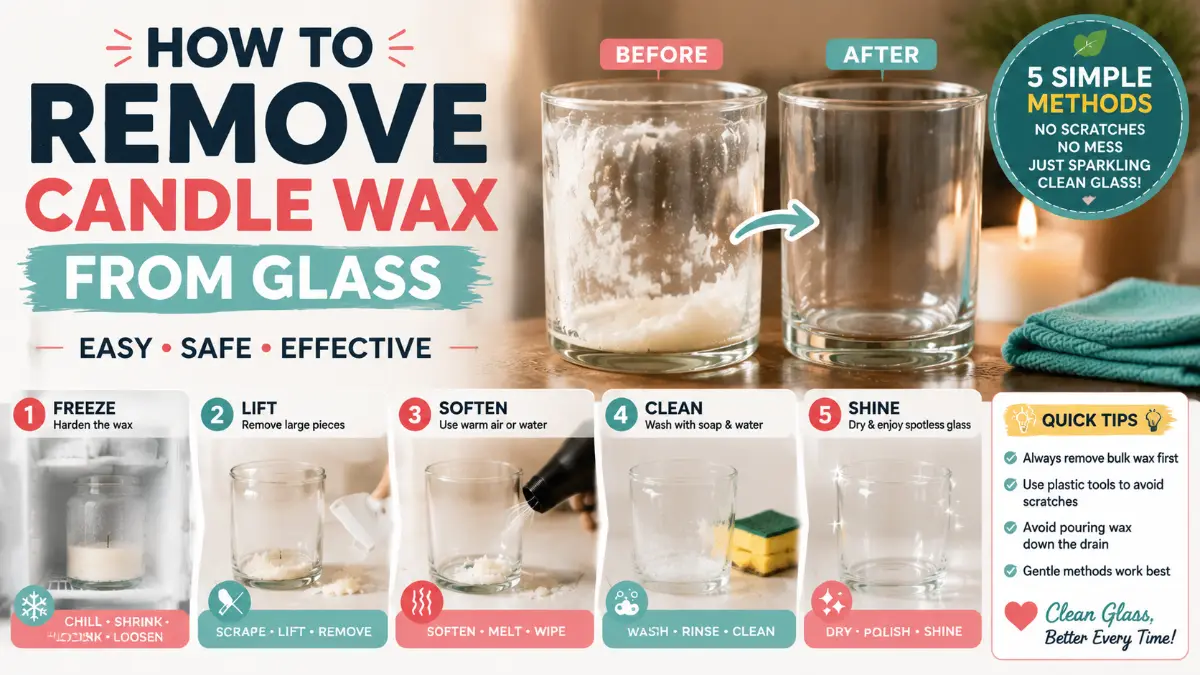
If you’re trying to figure out how to remove candle wax from glass, the safest method is not always the fastest-looking one. Scraping hard wax with a knife or pouring very hot water into a cold jar can create more problems than the wax itself. A better approach is to first decide whether the glass is removable or fixed, whether the wax is thick or thin, and whether the surface has any coating or decoration.
This guide focuses on choosing the right method for the specific glass surface in front of you. Instead of treating every candle jar, tabletop, and window the same way, it uses a surface-first approach that helps reduce scratching, thermal stress, and messy wax spreading.
Start by Identifying the Glass Surface
Before cleaning anything, look at the glass itself.
Ask these three questions:
- Can the glass object be moved safely?
- Is the glass plain or does it have paint, frosting, tinting, or decorative coating?
- Is the wax a thick solid chunk or only a thin film?
Your answers determine which removal method makes the most sense.
For example, a freezer is practical for a small candle jar but useless for a large window. A hairdryer works well on a tabletop but may be unnecessary for a jar whose wax can simply be chilled and lifted out.
Quick Decision Guide
Use this table before you start.
| Type of Wax Problem | Best First Approach | What to Avoid |
| Thick wax in candle jar | Freezing | Metal knife |
| Thin wax film in jar | Warm water and dish soap | Abrasive pad |
| Wax on window | Gentle hairdryer heat | Sudden intense heat |
| Wax on glass table | Harden, lift, then warm residue | Smearing melted wax |
| Decorative glass | Least aggressive method | Strong solvents |
| Flat plain glass with stubborn wax | Plastic scraper first | Razor unless suitable |
Why Wax Removal Works Better When You Control Temperature
Most candle wax does not need to be aggressively dissolved. Instead, temperature changes can alter the wax enough to make removal easier. Cooling hardens it and can help it pull away from a container. Gentle warmth softens it so you can blot or lift it.
Paraffin wax, one common candle material, is insoluble in water, which means simply soaking wax in water does not make it disappear. Warm water works mainly because the heat softens the wax. Dish soap is more useful afterward for oily residue. That distinction matters because it explains why temperature control usually works better than scrubbing.
Method 1: Remove Wax From a Glass Jar With Cold
If your main goal is to remove wax from a glass jar, chilling is usually the safest place to begin. This method works best when a solid layer of wax remains at the bottom of a used candle jar.
How to Do It
- Let the jar cool fully to room temperature.
- Remove any loose wick fragments or debris.
- Place the jar upright in the freezer.
- Leave it until the wax becomes very firm.
- Take the jar out and gently press near the edge of the wax using a plastic tool.
- Tip the jar over a bin or protected surface.
- Lift out the loosened wax.
- Repeat if a second layer remains.
Do not force the wax out. If it stays firmly attached, return the jar to the freezer and give it more time.
What Tool Should You Use?
Good options include:
- Old plastic gift card
- Plastic putty scraper
- Silicone utensil
- Rounded plastic spoon
Avoid sharp metal knives inside curved jars.
Also Read: Fruit Riot Buying Guide: Flavors, Nutrition, and Where to Find It
Method 2: Use Warm Water When the Wax Won’t Release
Some candle jars have wax spread thinly around the sides rather than forming one solid plug. In that situation, controlled warmth can be more useful than freezing.
Warm-Water Method
- Allow the jar to reach room temperature.
- Fill a bowl or sink with warm-to-hot tap water.
- Stand the jar inside the water.
- Let the glass warm gradually.
- Wait until the wax begins to soften.
- Lift or wipe away the wax.
- Wash the jar with dish soap.
The key word here is gradual. Do not move very cold glass directly into hot water. Avoid pouring boiling water into a cool candle container.
Should Water Go Inside the Jar?
It does not have to. Warming the outside of the container can be enough to soften the wax. Keeping water outside the jar can also make it easier to collect the wax instead of turning it into floating pieces.
Method 3: Remove Wax From Glass Tables and Windows
Fixed glass surfaces require a different strategy because you cannot place them in a freezer or sink. For how to remove candle wax from glass such as a table or window, start by letting the wax become solid.
Step-by-Step
- Allow spilled wax to cool completely.
- Lift off any thick pieces with a plastic scraper.
- Set a hairdryer to low or medium heat.
- Keep it several inches from the surface.
- Move it continuously across the residue.
- When the wax softens, blot it with a paper towel.
- Repeat if necessary.
- Clean the final film with dish soap or an appropriate glass cleaner.
Blotting matters. If you rub softened wax aggressively, you can spread a small stain into a much larger film.
Method 4: Remove a Thin Waxy Film
After the main wax is gone, many people think the job is finished. Then they notice cloudy streaks. That haze may be caused by a combination of tiny wax particles, fragrance oil, dye, or other candle ingredients.
Best Starting Cleaner
Use:
- Warm water
- Grease-cutting dish soap
- Soft microfiber cloth
Wash the surface once, rinse it thoroughly, and inspect it under good light. A second wash may be enough.
Can You Use Rubbing Alcohol?
Rubbing alcohol may help with light residue on compatible plain glass, but it is not the best primary solution for hardened wax. Use it only after the solid wax has already been removed. Also avoid applying it near open flames or hot surfaces.
Method 5: Scraping Stubborn Wax From Flat Glass
Sometimes a hardened wax spot refuses to lift even after cooling or warming. On suitable flat glass, a proper glass scraper may help. However, this technique should be used cautiously.
Do Not Use a Razor on These Surfaces
Avoid sharp blades on:
- Curved candle jars
- Painted glass
- Tinted glass
- Frosted surfaces
- Coated glass
- Decorative glass
- Unknown specialty finishes
If the Surface Is Plain and Suitable
Clean the surface first so dirt does not become trapped under the blade. Then keep the scraper almost flat and use light pressure. Never dig the blade downward. If the surface begins to mark, stop immediately.
How to Remove Melted Wax From Glass
Freshly melted wax often creates panic, but wiping it immediately is usually not the best choice.
Instead:
- Keep hands away until the wax cools.
- Let it harden.
- Lift the main deposit.
- Use controlled heat on any thin residue.
- Blot the softened wax.
- Clean the glass afterward.
Waiting for wax to harden often makes cleanup easier because it turns a liquid spill into a removable solid.
What Not to Do
A few methods seem fast but create unnecessary risk.
Don’t Use a Kitchen Knife
A knife can slip, scratch the glass, or injure your hand. Use a plastic tool instead.
Don’t Use Steel Wool
Wax rarely requires abrasive scrubbing. Steel wool and rough pads can scratch or damage some glass finishes.
Don’t Pour Wax Down the Sink
Wax can cool and solidify again. Collect removed wax with a paper towel or another disposable material and place it in the trash.
Don’t Use an Open Flame
Never use a lighter, torch, or stovetop flame to melt wax off a jar. Gentle household heat is enough.
Don’t Assume Every Glass Jar Is Heat-Safe
A candle jar may survive normal candle use yet still be vulnerable if exposed to extreme temperature changes or reused after damage. Inspect it before applying heat.
How to Clean Candle Wax From Glass With Minimal Mess
The cleanest sequence for most household situations is:
Harden or soften → lift → blot → wash → dry
That order matters. If you skip directly to washing, wax may spread. If you skip directly to scraping, you may use more pressure than necessary. If you melt too much wax at once, cleanup becomes messier.
Best Method for Different Candle Situations
Candle Has Burned to the Bottom
Use the freezer. The remaining wax may come out as a solid piece.
Wax Is Stuck Up the Sides
Use gradual warming. This helps soften thin layers that freezing may not release cleanly.
Wax Spilled on a Glass Table
Let it harden first, lift the thick deposit, then use a hairdryer on the thin remainder.
Jar Has a Decorative Finish
Choose the least aggressive method. Avoid strong solvents unless you know the finish can tolerate them.
Only a Greasy Film Remains
Use dish soap before reaching for another chemical.
How to Clean an Empty Candle Jar for Household Reuse
If you want to clean an empty candle jar, remove more than just the visible wax.
Final Cleanup Checklist
- Remove all solid wax.
- Take out the wick tab if it releases safely.
- Wash the jar with warm water and dish soap.
- Rinse away fragrance and cleaning residue.
- Dry thoroughly.
- Check for cracks or chips.
- Remove labels if desired.
Clean jars can be useful for storing non-food household items such as:
- Cotton pads
- Craft supplies
- Buttons
- Clips
- Small accessories
- Desk items
Can You Refill an Old Candle Jar?
A clean candle jar is not automatically suitable for making another candle. The glass may have been weakened during previous use, or it may not have been designed for repeated candle refilling. If you intend to make a candle, use a container that is specifically suitable for candle making instead of assuming any empty jar is safe. That is especially important if the old container has chips, cracks, decoration, thin glass, or unknown construction.
A Simple Wax Removal Routine for Most Jars
If you only want one practical sequence to remember, use this:
- Cool the candle jar completely.
- Freeze it.
- Lift out the wax with plastic.
- Warm stubborn residue gently if needed.
- Wash with dish soap.
- Dry and inspect the container.
This approach solves most ordinary jar-cleaning problems without strong solvents or aggressive tools.
Frequently Asked Questions
What is the safest way, how to remove candle wax from glass?
For a removable candle jar, freezing followed by gentle lifting with a plastic scraper is one of the least aggressive options. For fixed glass, controlled warming is usually more practical.
How long should I freeze a candle jar?
Start checking after about an hour. There is no universal time because wax amount, candle formulation, freezer temperature, and jar dimensions differ.
Can I pour boiling water into a candle jar?
It is safer to avoid pouring boiling water directly into cool glass. Gradual warming with warm-to-hot tap water reduces unnecessary temperature shock.
Can I use vinegar to remove candle wax?
Vinegar is not the best tool for removing a thick wax deposit. Remove the solid wax first and use vinegar only for compatible general glass cleaning afterward if needed.
Does rubbing alcohol dissolve candle wax?
It should not be relied on as the main wax-removal method. It may help clean a light film from compatible plain glass after the bulk wax has already been removed.
How do I remove candle residue from glass?
Wash the glass with warm water and grease-cutting dish soap after the solid wax is gone. Use a microfiber cloth, rinse thoroughly, and repeat if a haze remains.
Can I use a razor blade on glass?
A proper glass scraper may be suitable for some plain flat glass, but avoid razor blades on curved jars, coated surfaces, tinted glass, or decorative finishes.
How do I remove wax from a glass tabletop without scratching it?
Let the wax harden, lift thick pieces with a plastic tool, soften the remaining film with a hairdryer, blot it, and then clean the glass.
Should I remove wax before recycling a candle jar?
Local recycling rules vary. Check your local program. Removing wax, wick hardware, and other non-glass material can still make the container easier to clean or repurpose.
Can I reuse a cleaned candle jar for another candle?
Do not assume that every used candle jar is safe to refill. If you are making a new candle, use a container specifically suitable for candle use.
