
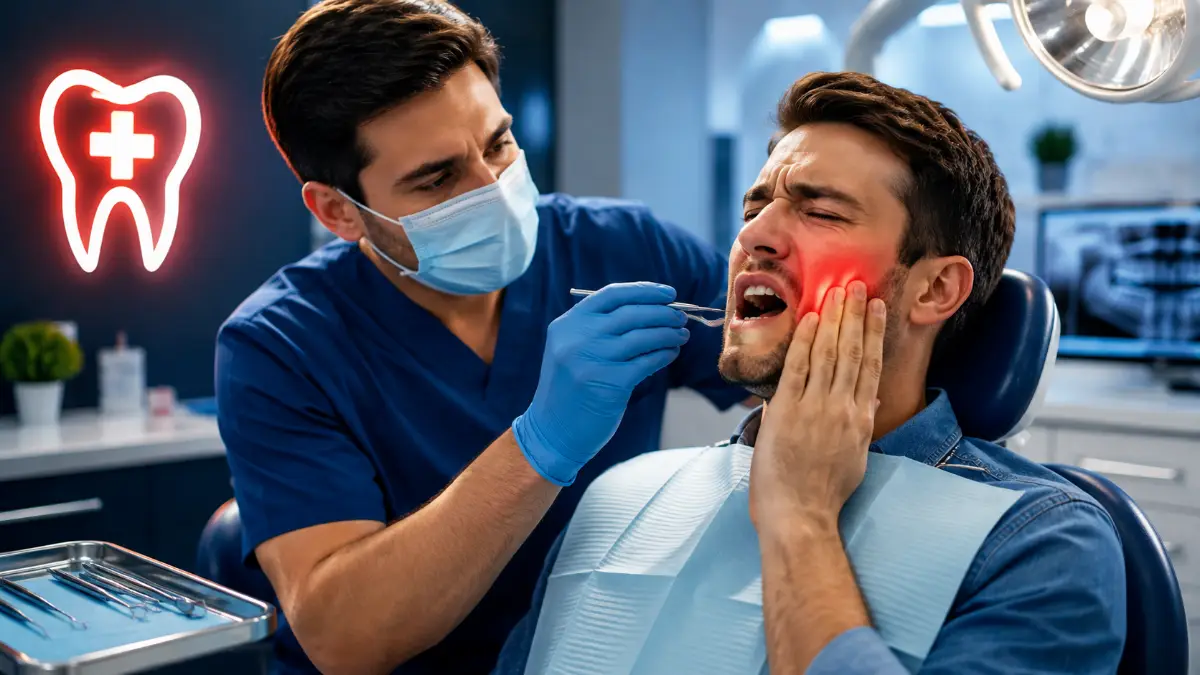
A severe toothache, broken tooth, swelling in the face, or dental injury can require treatment today. An emergency dentist can assess the cause, relieve pain safely, and provide urgent treatment such as stabilizing an injured tooth, draining an infection when appropriate, placing a temporary restoration, or arranging follow-up care.
The right next step depends on your symptoms. Most urgent tooth, gum, and restoration problems belong with an emergency dental clinic. However, breathing or swallowing difficulty, uncontrolled bleeding, serious facial trauma, or severe rapidly spreading swelling need immediate medical attention at a hospital emergency department.
Start With a 60-Second Safety Check
Before searching for an emergency dentist near me, check for symptoms that may make this a medical emergency rather than a dental-only problem.
Go to a Hospital ER Immediately If You Have
- Difficulty breathing, speaking, or swallowing
- Severe swelling in the mouth, jaw, neck, tongue, or throat
- A swollen or painful eye, new vision problems, or swelling spreading around the eye
- Bleeding that continues despite sustained direct pressure
- Serious facial trauma, loss of consciousness, or concern that the jaw is fractured
- An inability to open your mouth normally with significant swelling or fever
- Confusion, severe weakness, or rapidly worsening illness alongside swelling or infection symptoms
These signs can indicate a problem affecting the airway, deeper facial spaces, or serious trauma. Do not delay by waiting for a routine dental appointment.
Call a Same-Day Dentist If You Have
- A severe, persistent, or throbbing toothache
- A broken, cracked, loose, or knocked-out permanent tooth
- A painful lost filling, crown, bridge, or veneer
- Gum or facial swelling that is not affecting breathing or swallowing
- A suspected dental abscess, especially with bad taste, pus, pressure, or fever
- Pain when biting that began suddenly
- A dental injury from a fall, sports accident, collision, or biting something hard
- Significant gum bleeding that has stopped but still needs assessment
An emergency dentist can examine the tooth, take X-rays where needed, and treat the dental source rather than only suppressing symptoms.
Read More: Tubby Todd: Review, Is This Baby Skincare Brand Actually Worth the Hype?
Why a Severe Toothache Should Not Be Ignored
A toothache is not always a dental emergency, but severe pain often indicates an issue that requires prompt attention. Possible causes include deep tooth decay, pulp inflammation, a crack, an abscess, gum infection, a damaged filling, an exposed root surface, or trauma.
Pain can change quickly. A tooth that feels better for a short time is not necessarily healing. In some cases, the nerve inside a tooth can become less responsive while infection or structural damage continues.
Seek urgent dental care if tooth pain:
- Keeps you awake or stops you from eating normally
- Feels constant, pulsing, or increasingly intense
- Is accompanied by swelling, fever, or a bad taste in the mouth
- Occurs after a dental injury
- Gets worse when you bite down
- Does not settle with basic self-care measures
- Appears alongside a loose tooth, cracked tooth, or lost restoration
An emergency dentist can determine whether the problem needs a filling, root canal treatment, dental crown, drainage, extraction, or another approach based on your examination.
A Better Way to Decide Where to Go
| What you notice | Best next step | Why it matters |
| Trouble breathing, swallowing, speaking, or opening the mouth with major swelling | Hospital emergency department immediately | These may be signs of a serious infection or airway concern |
| Knocked-out permanent tooth | Emergency dentist immediately | Prompt professional care may improve the chance of saving the tooth |
| Severe tooth pain without airway symptoms | Emergency dentist or same-day dentist | A dentist can diagnose and treat the source of pain |
| Facial or gum swelling without breathing difficulty | Emergency dentist the same day | Swelling may be caused by infection and can worsen |
| Broken tooth with sharp edges or exposed inner tissue | Emergency dental clinic | The tooth may need protection, repair, or further treatment |
| Lost crown or filling with pain | Urgent dental appointment | The exposed tooth may be sensitive or vulnerable to further damage |
| Small painless chip | Routine dentist appointment | Usually less urgent, but still worth evaluating |
| Minor sensitivity to cold or sweets | Routine appointment unless worsening | May be early decay, gum recession, or another non-emergency issue |
This table is general guidance, not a diagnosis. If symptoms change, move faster and speak directly with a dental or medical professional.
What an Emergency Dentist Can Do
A hospital emergency department is essential for life-threatening symptoms and major trauma. But for most tooth-related problems, an emergency dentist is better equipped to provide definitive oral treatment.
Emergency dental care may include:
- Dental X-rays and focused oral examination
- Temporary fillings or protective restorations
- Repairing or recementing a crown where clinically appropriate
- Stabilizing a loose or traumatized tooth
- Splinting a knocked-out or displaced permanent tooth
- Opening and draining a dental infection where indicated
- Beginning root canal treatment
- Emergency extraction when a tooth cannot be retained safely
- Managing sharp edges that are injuring the lips, tongue, or cheek
- Creating a treatment and follow-up plan
Emergency departments may provide pain management and evaluate dangerous swelling or trauma, but many cannot complete dental procedures such as restoring a cracked tooth or treating the source of an abscess.
What to Do After a Knocked-Out Tooth
A knocked-out permanent tooth is time-sensitive. The tooth should be handled carefully to avoid damaging the root surface.
Steps for a Knocked-Out Permanent Tooth
- Find the tooth as quickly as possible.
- Pick it up by the crown, not the root.
- If it is dirty, rinse it very gently and briefly with clean water or milk.
- Do not scrub, scrape, dry, or wrap the tooth in tissue.
- If you can place it back into the socket correctly, do so gently and bite down lightly on clean gauze.
- If reinsertion is not possible, keep the tooth moist in cold milk or saliva.
- Contact an emergency dentist immediately.
Avoid leaving the tooth dry. Do not place it in hot water, alcohol, disinfectant, or a dry container.
What if a Baby Tooth Is Knocked Out?
A knocked-out baby tooth should not be put back into the socket. Reinserting a primary tooth can potentially harm the permanent tooth developing beneath it.
Instead, control bleeding with gentle pressure on gauze, use a cold compress for swelling, and contact a dentist for advice. The child may still need an assessment of nearby teeth, the gums, and the developing permanent tooth.
Broken Tooth, Cracked Tooth or Lost Crown
A broken tooth may be a minor chip, a deep fracture, or a crack that extends below the gumline. The severity is not always obvious from appearance alone.
Until you reach a dentist:
- Rinse gently with warm water
- Save broken fragments if you can find them
- Keep fragments moist in milk or saliva
- Use a cold compress outside the cheek if there is swelling
- Cover a sharp edge with dental wax or sugar-free gum if needed
- Avoid chewing on that side
- Avoid hard, sticky, hot, cold, or very sweet foods
If a crown falls off, keep it and take it to the appointment. Avoid trying to permanently glue it back yourself. Household glues are unsafe for oral use and can make professional repair more difficult.
A lost filling or crown without pain may not require an ER visit, but it should still be checked promptly because the exposed tooth can crack, become sensitive, or allow decay to progress.
How to Manage Pain While Waiting for Care
Temporary measures can make you more comfortable, but they should never replace professional emergency dental care when symptoms are severe.
Helpful Temporary Measures
- Rinse the mouth gently with warm salt water
- Use a cold compress on the outside of the face for short intervals
- Avoid chewing on the painful side
- Choose soft foods if eating is uncomfortable
- Keep your head elevated when resting if swelling or throbbing is present
- Follow the package instructions if using an appropriate over-the-counter pain reliever
What Not to Do
- Do not put aspirin directly on a tooth or gum
- Do not use alcohol, bleach, or household chemicals inside the mouth
- Do not attempt to drain a swelling or abscess yourself
- Do not take someone else’s antibiotics
- Do not use leftover or expired prescriptions
- Do not ignore fever, growing swelling, or increasing pain
Over-the-counter pain medication may not be suitable for everyone. People with kidney disease, gastrointestinal ulcers or bleeding, certain cardiovascular conditions, bleeding disorders, medication interactions, allergies to NSAIDs, liver disease, or pregnancy-related restrictions should check with a pharmacist, physician, or dentist before choosing medication.
Also Read: Master the Smith Machine: Proper Form, Muscles Worked, and Workout Plans for Every Level
Dental Infection and Facial Swelling
A dental abscess is a localized bacterial infection that can develop around a tooth or gum tissue. It may cause throbbing pain, sensitivity, gum swelling, facial swelling, bad taste, pus, fever, or discomfort when chewing.
The key point is that infection requires professional assessment. Pain relievers may reduce discomfort temporarily, but they do not remove the infection source. Likewise, antibiotics are not a substitute for dental treatment such as drainage, root canal therapy, or extraction when those treatments are needed.
Professional dental guidance generally prioritizes treating the source of most urgent dental pain and localized swelling over relying on antibiotics alone. A dentist or physician may prescribe antibiotics when there are signs of spreading infection or systemic illness, such as fever or significant facial swelling.
Seek Immediate Help for Infection Symptoms If
- Swelling is spreading into the neck, around the eye, mouth, or throat
- You have trouble swallowing, breathing, or speaking
- You cannot open your mouth normally
- You feel feverish, weak, confused, or significantly unwell
- Pain and swelling are worsening rapidly
These symptoms need urgent escalation. Do not wait for a routine appointment.
Finding a 24 Hour Emergency Dentist
Searching for a 24 hour emergency dentist can be stressful, especially outside normal business hours. Some practices advertise emergency services but only answer calls during selected periods, while others reserve after-hours availability for existing patients.
Before travelling, call and verify the details.
Questions to Ask Before You Leave
- Are you open now?
- Can you see me today?
- Do you treat new emergency patients?
- Do you accept walk-ins, or is an appointment required?
- Do you handle the specific issue I have, such as a knocked-out tooth, abscess, broken tooth, or severe toothache?
- Are you genuinely open 24 hours, or do you provide limited after-hours care?
- What is your exact address and estimated wait time?
- Do you accept my insurance plan?
- What is the estimated emergency examination fee?
- Are X-rays, medication, or procedures charged separately?
- What should I bring with me?
This short phone check can prevent a wasted journey and ensure the clinic can provide the type of urgent dental care you need.
Other Places to Check
- Your regular family dentist
- Your dental insurance provider’s emergency network
- Local dental schools and university clinics
- Community health centers
- Dedicated emergency dental clinics
- Local urgent dental care services that operate evenings or weekends
Never assume an online listing is current. Opening hours, appointment availability, and after-hours policies can change.
What Happens at a Same-Day Dental Appointment?
A same-day dentist will usually focus on diagnosis, pain control, safety, and protecting the tooth from further damage.
Your visit may involve:
- A short medical and dental history
- Questions about the injury, pain pattern, swelling, allergies, and current medications
- An oral examination
- Dental X-rays when needed
- Pain control through appropriate local anesthesia or other methods
- Emergency treatment such as a temporary restoration, drainage, splint, root canal procedure, or extraction
- A follow-up plan for permanent treatment
Not every problem can be fully completed in one appointment. For example, a dentist may stabilize a damaged tooth first and schedule a permanent crown or additional root canal treatment later.
Emergency Dental Costs and Payment Questions
Emergency dental care costs vary by location, the time of day, the clinic, insurance coverage, diagnostic needs, and the treatment required.
Potential charges can include:
- Emergency examination
- Dental X-rays
- Temporary filling or crown repair
- Root canal treatment
- Tooth extraction
- Abscess drainage
- Splinting a loose or injured tooth
- Prescription medication where clinically appropriate
- Follow-up restorative treatment
Ask for an estimate of the examination fee before you go. After examination, ask the dental team to explain the diagnosis, recommended treatment, alternatives, expected costs, and available payment arrangements.
If you do not have insurance, ask about self-pay rates, payment plans, dental schools, or community programs. Do not let financial uncertainty prevent you from seeking help for severe swelling, escalating pain, trauma, or signs of infection.
Reduce the Risk of Future Emergencies
Not every dental emergency is avoidable, but prevention can reduce the likelihood of sudden pain and injury.
- Wear a mouthguard for contact sports and activities with fall risk
- Avoid chewing ice, hard candy, popcorn kernels, and non-food objects
- Do not use teeth to open bottles, packaging, or containers
- Attend routine dental checkups
- Treat decay, cracked fillings, and loose crowns early
- Brush twice a day with fluoride toothpaste
- Clean between teeth daily
- Address recurring tooth sensitivity, gum swelling, or bite pain before it becomes severe
A small dental problem is often easier and less costly to treat before it turns into an emergency.
When to Act Now
If you have severe pain, swelling, infection symptoms, a knocked-out permanent tooth, a broken tooth, or dental bleeding, contact an emergency dentist promptly. If your symptoms affect breathing, swallowing, consciousness, vision, or the ability to control bleeding, go to a hospital emergency department immediately.
Quick action can protect your comfort, reduce complications, and give a dentist the best opportunity to preserve your oral health.
Frequently Asked Questions
Can I visit an emergency dentist without an appointment?
Many emergency dental clinics accept walk-ins, but policies vary. Calling before you travel is still wise because a practice may require triage by phone, have limited same-day capacity, or only treat existing patients after hours. Ask whether the clinic can see you today, whether it handles your specific problem, and what documents or payment information you should bring.
Is a severe toothache always an emergency?
Not every toothache requires immediate treatment, but severe, persistent, worsening, or throbbing pain should be assessed urgently. The need for same-day emergency toothache treatment is greater if pain is accompanied by facial swelling, fever, drainage, a bad taste, trauma, or difficulty eating or sleeping. A dentist can determine whether the cause is decay, infection, a crack, gum disease, or another issue.
Can an emergency dentist treat a tooth infection on the same day?
Often, yes. A dentist may examine the tooth, take X-rays, control pain, drain infection when appropriate, and provide definitive or temporary treatment. The exact approach depends on the infection’s location, severity, your medical history, and whether there are signs of spreading infection. Antibiotics alone do not generally eliminate the dental source of infection.
Will the ER pull a tooth for severe dental pain?
Most hospital emergency departments do not routinely provide dental extraction, filling, root canal, crown repair, or other definitive dental procedures. They are best suited to serious trauma, uncontrolled bleeding, airway concerns, and dangerous spreading infection. For tooth-specific treatment, an emergency dentist is generally the more appropriate provider.
What if my face is swollen but I can still breathe normally?
Facial swelling associated with a painful tooth should be evaluated by an emergency dentist the same day. It may represent infection or inflammation that can worsen. Go to a hospital emergency department if swelling rapidly increases, moves toward the neck or eye, causes fever or severe illness, or begins to affect breathing, swallowing, speaking, or normal mouth opening.
Can I use temporary dental cement for a lost crown?
Temporary dental cement may be appropriate in limited situations only if a dentist or pharmacist advises it and the crown fits properly. Never use household glue. If the crown is painful, damaged, does not fit, or the tooth underneath is broken, seek urgent dental care rather than attempting a home repair.
Should I rinse a knocked-out tooth with water?
If a permanent tooth is dirty, it can be rinsed gently and briefly with clean water or milk. Avoid scrubbing the root because delicate cells on the surface can be damaged. The tooth should be kept moist and evaluated by an emergency dentist as quickly as possible.
What if my child has a dental injury at night?
If a child has trouble breathing, swallowing, severe facial swelling, uncontrolled bleeding, loss of consciousness, or major facial trauma, seek emergency medical care. For a knocked-out permanent tooth, broken tooth, or significant tooth pain without those medical danger signs, contact an emergency dentist or pediatric dentist for urgent guidance. Do not reinsert a knocked-out baby tooth.
Can I wait until morning for a chipped tooth?
A small painless chip can often wait for a routine dental appointment. However, seek urgent care sooner if the tooth is sharp, painful, loose, sensitive to temperature, visibly cracked, or damaged after a significant injury. Save any broken fragments and avoid chewing on that side until a dentist evaluates it.
Why does a toothache sometimes stop suddenly?
Pain stopping does not always mean the problem has been resolved. In some cases, nerve tissue inside a damaged or infected tooth may become less responsive while the underlying condition continues. If severe pain suddenly disappears after days of worsening discomfort, especially with swelling or a bad taste, schedule dental evaluation promptly.
