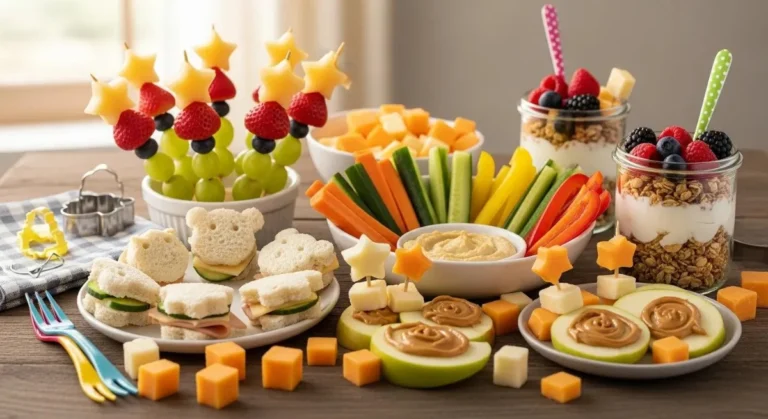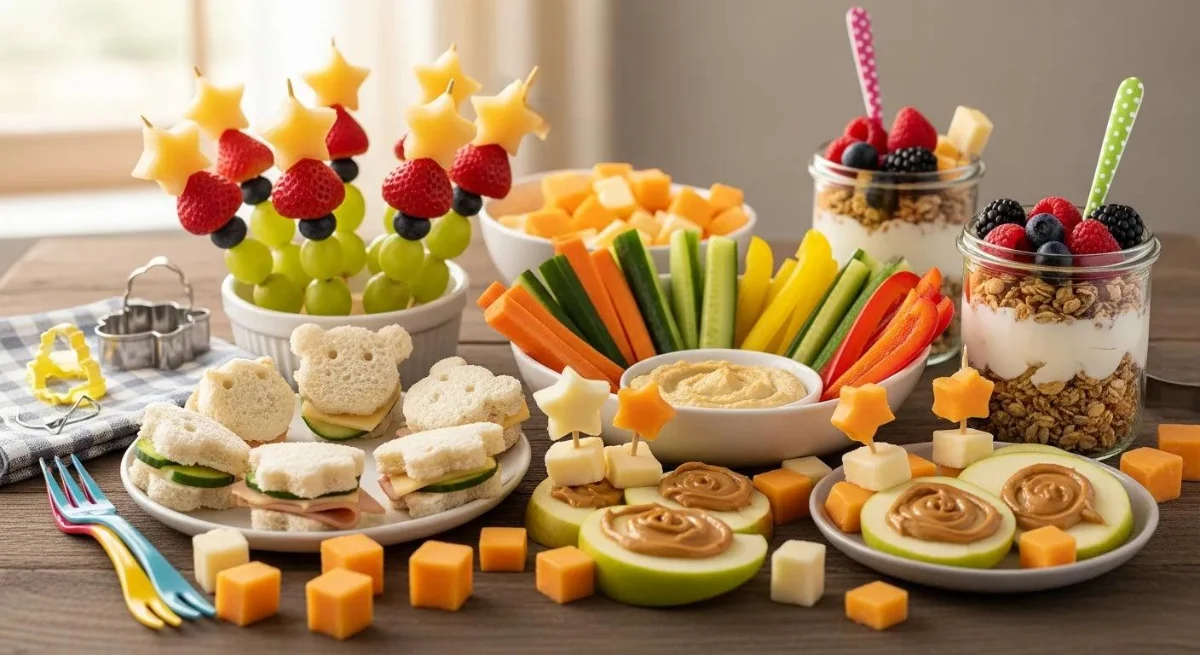
Fruit, yogurts, wholegrain crackers, cheese and homemade foods can all be utilised to give children good nutrition. Foods should ideally be both easy to prepare and eat and should also cater for a child’s age and level of appetite.
Below are 25 easy-to-prepare healthy food ideas which will suit children. Included are fast, allergy-friendly and nutritional advice for selecting foods.
25 Simple and Healthy Snacks for Kids Food Ideas for Children
Often healthy food involves a combination of elements for example, fruit and high-protein yogurts. According to the USDA, it is advised that a range of healthy foods should be eaten and that snacking should be low in added sugar, salt and saturated fats.
Apple and peanut Butter
Slice up some apples and top with a layer of unsweetened peanut butter. Apples are a good source of fibre and peanut butter contains protein and fat.
For younger children, apples should either be pureed or thinly sliced. Nut butter should also be applied in a thin layer to further minimise a child’s choking risk.
Greek yogurt and fruit
Top plain Greek yogurt with strawberries, blueberries or raspberries. Greek yogurt contains protein and calcium and the fruit contributes natural sweetness.
Unsweetened Greek yogurt should be used to ensure that extra sugar is not added.
Banana and oats pancake
Blend one ripe banana, one egg and three tablespoons of oats together. Cook ‘pancakes’ in a lightly oiled frying pan over a medium-low heat until cooked through.
These soft pancakes are ideal for both breakfast and as an afternoon snack.
Wholegrain crackers and cheese
Top wholegrain crackers with thin slices of cheddar (or other favoured cheese).
This food selection is high in carbohydrates, protein and calcium and does not need to be cooked.
Carrots and hummus
Provide carrot sticks with two tablespoons of hummus for a tasty, mouth-feelably crunchy snack.
Soft cooked carrots should be served to, and where necessary for, toddlers and young children instead of raw carrots.
Strawberry and banana smoothie
Blend one banana, ½ cup strawberries and ½ cup plain yogurt along with a touch of milk.
As well as being naturally sweet, this cold and creamy option is a good choice for children wishing to consume something of this nature.
Homemade trail mix
Combine unsalted nuts and pumpkin seeds with a modest quantity of unsweetened dried fruit.
Whilst trail mix is most suitable for older children as they can chew nuts and seeds, whole nuts and comparable items should not be given to children under the age of four due to choking concerns.
Cucumber and cream cheese ‘sandwiches’
Put a small amount of cream cheese between thin slices of cucumber.
For younger children, cucumber should be cut so that it is easily manageable rather than being served in thick slices.
Hard-Boiled Eggs
Hard-boiled eggs are an easily prepared, protein-rich food type. They can be pre-prepared.
Once peeled, eggs can then be cut into portions appropriate for a child’s age. They should be stored in the fridge.
Avocado toast
Put mashed avocado on a small piece of wholegrain toast and add a little lemon juice.
Toast can be cut into soft and easily handled strips or sections for young children.
Cottage cheese and fruit
Combine cottage cheese with cubed peaches, soft pears or berries.
Alongside providing protein and calcium, fruit can be used to add sweetness – without the requirement for syrups.
Homemade frozen yogurt
Blend plain yogurt with pureed banana or berries. Pour the resultant mixture into appropriate moulds and place in the freezer to solidify.
As opposed to highly sweet frozen foods, this is a tasty and healthy option. Again, it should be provided in an age-appropriate manner.
Whole-wheat quesadilla cups
Place shredded cheese between two small wholewheat tortilla wraps. Cook in a frying pan until the cheese has melted and then divide into sections.
Extra interest can be introduced by adding finely chopped cooked spinach and/or beans.
Sweet potato
Cube sweet potato and drizzle with some olive oil. Roast at 425°F, flipping the sweet potato halfway through, until it is sufficiently cooked.
For younger children, soft rather than firm and crispy sections of sweet potato should be served.
Celery and cream cheese
Top celery sticks with cream cheese to produce a tasty and invigorating food item.
Whilst raw celery can be hard for young children to chew, this should therefore only be served to older children. Again, softer celery can be provided to toddlers.
Homemade banana and oats cookies
Blend two ripe bananas and one cup of rolled oats. Shape into cookie forms and cook in an oven at 350°F for around 12-15 minutes or until cooked through.
Cookies can be produced in this manner without added sugar and are a good homemade snack option.
Apple and cheese
Either lay thin apple slices next to small cheese sections or wrap apple slices in a soft wholewheat tortilla along with some cheese.
This food selection is both sweet and high in protein and has a good texture contrast.
Roasted chickpeas
Drizzle olive oil and gentle seasonings over drained chickpeas. Place into an oven and roast at 400°F, stirring periodically, for around 20-30 minutes.
Whilst older children can eat crunchy chickpeas, younger children face a choking risk. Therefore, soft mashed chickpeas should be provided.
Wholegrain toast and almond butter
Put a layer of almond butter on wholegrain toast. Add mashed banana to add sweetness.
When in nut-allergic environments, sunflower seed butter should be used. Furthermore, always verify what allergies are permitted within a child’s school.
Mini veggie muffins
Create mini ‘muffins’ containing wholewheat flour, eggs, milk, shredded zucchini and grated carrots. Cook these in a mini muffin tin until cooked.
These are easily prepared and can be stored in the fridge for future consumption.
Bell pepper and yogurt dip
Provide coloured bell pepper strips with a dip comprising plain yogurt and mild seasonings.
Again, softer or finely diced bell peppers should be served to, and where necessary for, young children as they can be more easily chewed.
Homemade fruit salad
Dice melon, strawberries, banana and orange. Round fruit such as grapes should be cut lengthways and then further divided to make them more easily consumable by young children.
Ensure that fruit is cut into sections suitable for a child’s age.
Peanut butter and banana ‘sandwich’
Put a layer of peanut butter on wholegrain bread and top with apple slices. Section into small sandwiches.
This is a good choice for both an after-school and light breakfast snack.
Homemade popcorn
Air-pop some popcorn and add a touch of seasoning. This is a budget-friendly source of wholegrains.
Nevertheless, popcorn is a choking risk and so should not be provided to children under the age of four.
Mini pizza toast
Put tomato sauce on wholegrain toast. Top with shredded mozzarella and finely chopped vegetables. Cook in an oven until the mozzarella has melted.
Allow toast to cool and then divide into suitable sized sections for eating.
Most appropriate food ideas by situation
Many factors influence which foods are most suitable for children to snack upon.
Situation
Suitable easy-to-eat foods
School
Wholegrain crackers, cheese and banana and oats cookies
After school
Mini quesadillas, avocado toast and berry topped yogurt
Morning
Banana pancakes, fruit and hard-boiled eggs
Out and about
Banana, wholegrain crackers and appropriate packaged yogurt
In hot weather
Fruit salad, smoothies and frozen yogurt
With fussy eaters
Mini pizza toast, apple slices and cheese wrapped apples
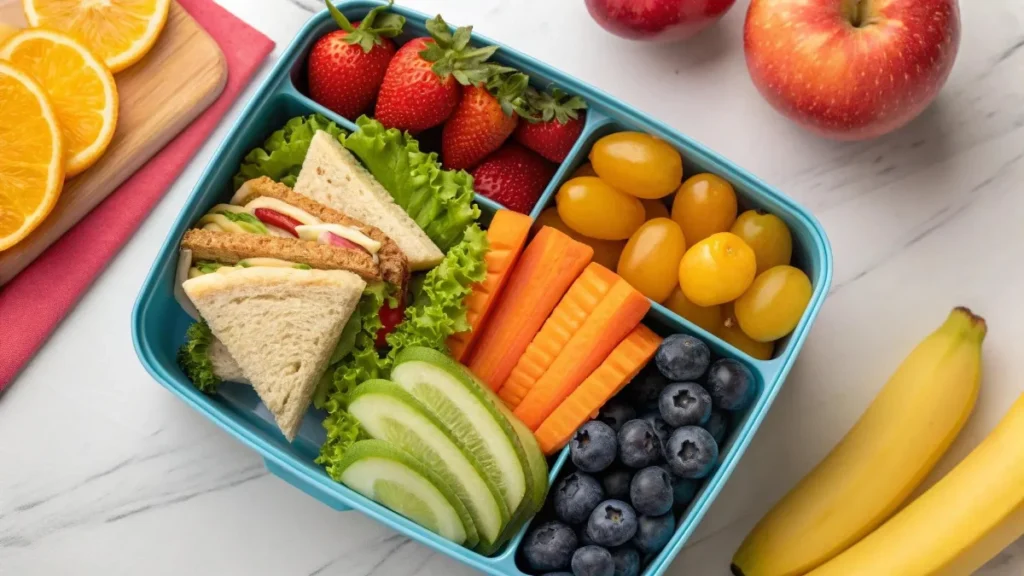
Perishable foods including yogurt, cheese, eggs and cooked items should be stored in a well-insulated lunch box along with enough ice packs to maintain a cold temperature.
Selecting healthy packaged food for children
Whilst home-cooked food is sometimes impractical, packaged food can also be healthy if it is nutrient rich and does not contain excessive sugar and/or salt.
According to the American Academy of Pediatrics, snacks should ideally include fruits, vegetables, wholegrains and healthy proteins.
Below are some basic rules for selecting packaged foods:
Look out for sugar content – check the Nutrition Facts information on products such as yogurt, granola bars and cereal.
Seek out foods labelled with wholegrains, for example wholewheat, early in the ingredients list.
Add protein – cheese, yogurt, eggs and hummus can all be used to enhance the satisfaction gained from foods.
Be aware of salt levels – compare salt content in items such as crackers and chips.
Take note of allergens – carefully read packages to determine whether they contain nuts, milk, eggs, soy and/or wheat.
Whilst packaged foods do not necessarily have to be flawless, a wide variety of foods should generally be consumed by children both at mealtimes and for snacks.
Healthy snack advice for toddlers and children
Children under the age of four require particular attention to be given to their snacking as specific food forms can present a choking risk.
Whole grapes, nuts, popcorn, firm raw vegetables and thick nut butter can all be hazardous, as outlined in the CDC’s advice on preventing choking.
To enhance snack safety:
Cut round foods such as grapes and cherry tomatoes into small, age-appropriate sections.
Cook firm vegetables so that they become soft for young children.
Apply nut butter in a thin layer.
Avoid giving children under the age of four whole nuts and popcorn and other similarly firm items.
Children should sit upright and be monitored whilst eating.
Where necessary, suitable food substitutes should be provided for children with allergies. Furthermore, a child’s personalised allergy care plan should be adhered to.
Encouraging children to eat healthily
Children often require multiple exposure experiences to new foods in order to feel at ease in relation to them. Healthy food can be encouraged to be eaten by making it attractive and easily obtainable.
Introduce new foods by also providing a child’s favoured food. Children can then select between two healthy food items, for example, berry topped yogurt or cheese and crackers.
Additionally, easily attainable clean fruit and pre-prepared vegetables are readily available options.
Snacks should ideally be provided at fairly regular intervals so that children will feel hungry at mealtimes. Appropriate quantities of food will depend on a child’s age, level of hunger and activity.
Generally, water and plain milk are better drink choices than those with added sugar. Present guidelines for healthy children’s drinking also advocate restricting juice consumption and avoiding sugar-laced drinks.
Read also: Healthy Snacks for Kids
Frequently Asked Questions
What are the healthiest snacks for kids?
Good choices include fresh fruit with yogurt, vegetables with hummus, whole-grain crackers with cheese, eggs, and avocado toast. The best snack provides useful nutrients and fits the child’s age, appetite, and dietary needs.
What are easy healthy snacks for kids to take to school?
Whole-grain crackers, bananas, appropriately prepared fruit, and homemade oat cookies are convenient choices. Cheese, yogurt, and eggs also work when packed with adequate cold storage. Always follow the school’s allergy policy.
What can I give my child instead of chips?
Try whole-grain crackers, baked sweet potato wedges, soft vegetable sticks with dip, or air-popped popcorn for children old enough to eat it safely. The best alternative depends on whether your child prefers crunchy, salty, or savory foods.
Are homemade snacks healthier than packaged snacks?
Not necessarily. Homemade snacks allow more control over ingredients, but nutritious packaged options are also available. Compare added sugar, sodium, fiber, protein, and portion sizes instead of judging a food only by whether it’s homemade.
How many snacks should kids eat each day?
Many children benefit from one or two planned snacks between meals, although younger children may need more frequent eating opportunities. The appropriate number depends on age, appetite, activity level, and meal timing.
Conclusion
Healthy snacks for kids can be simple, affordable, and enjoyable. Combining fruit, vegetables, whole grains, and protein-rich foods offers plenty of variety without requiring elaborate recipes.
Start with a few familiar favorites, prepare convenient options ahead of time, and introduce new foods gradually. With age-appropriate preparation and sensible portions, everyday snack time can support a balanced eating routine.