
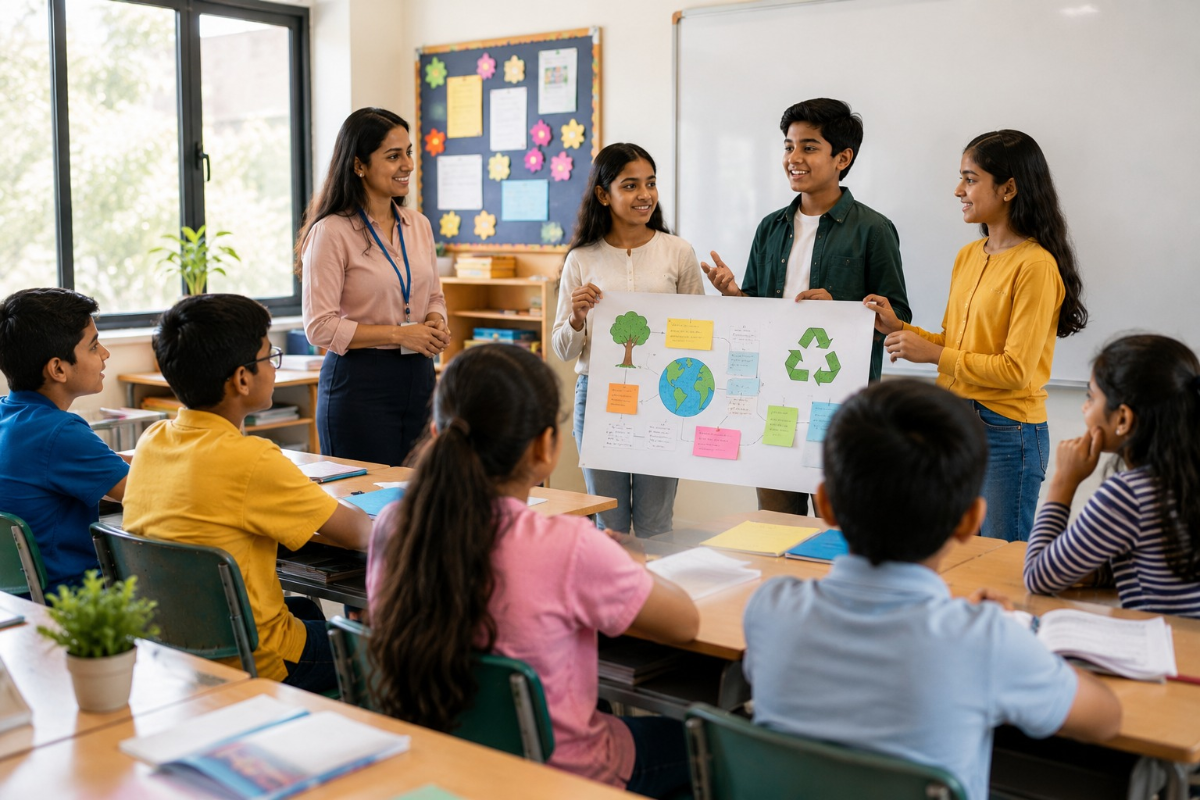
Picking the right classroom event shouldn’t take longer than planning it. Whether you have five minutes before a fire drill or five weeks before a showcase, this guide gives you a clean inventory of 32 school classroom events, organized by grade, time, budget, class size, and goal -with no repeated explanations and no vague promises.
This is the most complete resource of its kind for teachers searching for classroom event ideas, fun classroom events, and classroom celebration ideas that actually fit their schedule and budget. Every entry below is a genuine event, not a filler activity dressed up to pad a list.
What Is a Classroom Event?
A classroom event is a planned experience with a defined beginning and end, built around a specific goal -community-building, academic review, celebration, or family engagement. A science fair, a debate day, or a family STEM night are classroom events. A five-minute icebreaker or a daily check-in routine is not.
This distinction matters because searches for “classroom events” and “classroom activities for students” often return mixed results that blur planned events with quick warm-ups. Keeping the categories separate makes it easier to plan the right experience for the right amount of time.
Classroom Event vs Activity vs Routine
| Term | Definition | Example |
| Classroom event | Planned experience with a defined beginning and end | Science Fair |
| Classroom activity | An individual task within a lesson or event | Vocabulary Puzzle |
| Classroom routine | A recurring classroom practice, repeated daily or weekly | Daily Shout-Outs |
Events need a start and end time and a specific goal. Activities are the building blocks inside an event or lesson. Routines run quietly in the background of every school day. The sections below treat all three as related but separate categories -educational classroom activities and routines support events, they don’t replace the event inventory.
Also Read: Supplementary Angles
Find the Right Classroom Event in 30 Seconds
Match your available time and class size to the table below, then jump to the matching event in the master inventory.
| Time available | Best-fit event | Class size | Budget |
| Under 15 minutes | Human Bingo (quick round) | Any | Free |
| 20–30 minutes | Mini Quiz Show | Up to 30 | Free–Low |
| 45–60 minutes | Academic Escape Room | Up to 30 | Low–Medium |
| Half-day | Science Experiment Party | Any (with station rotation for 30+) | Medium |
| Full day/evening | Family STEM Night | Any | Medium–High |
| Recurring short slot | Community Circle | Any | Free |
Every entry in this matrix corresponds to a full event in the master inventory below -nothing here is an unlisted activity dressed up as an event.
30+ Classroom Event Ideas
This is the core inventory of classroom event ideas referenced throughout the rest of the guide. Each event has one clear purpose. Later sections -by goal, grade, time, budget, and class size -filter this same list rather than introducing new explanations, so you never have to re-read the same description twice.
Community Events
Community events build trust, connection, and a sense of belonging among students early in the term or after a break.
- Human Bingo -Structured mixer where students find classmates matching prompts on a bingo card.
- Community Circle -Facilitated discussion event where students share reflections in a rotating format.
- Two Truths and a Lie Mixer -Whole-class guessing event that pairs personal sharing with light competition.
- Class Norms Co-Creation Ceremony -Students draft and formally adopt shared classroom expectations.
- Back-to-School Meet-and-Greet -Opening-week event introducing students, families, and classroom expectations.
- Kindness Chain Launch -Students write and link paper notes recognizing peers, displayed as a class chain.
- Buddy Class Exchange -Two classes pair up for a joint activity session, often across grade levels.
Academic Review Events
These are the classroom events most commonly used before a test, at the end of a unit, or to review a semester’s material in an engaging format rather than a silent worksheet.
- Mini Quiz Show -Game-show-format review event using team buzzers or hand signals.
- Jeopardy-Style Review -Category-based review event covering a full unit before an assessment.
- Academic Escape Room -Puzzle-based review event where content mastery unlocks the next clue.
- Debate Day -Structured argumentation event where students defend assigned positions on a topic.
- Gallery Walk -Students rotate through posted work or stations, giving feedback at each stop.
- Classroom Trivia Tournament -Bracket-style knowledge competition across multiple review rounds.
- Student Conference Day -One-on-one or small-group review meetings between teacher and students.
Celebration Events
Classroom celebration ideas and classroom party ideas mark milestones -a finished unit, a holiday, or the end of the year -and give students a clear, positive payoff for sustained effort.
- Science Experiment Party -Milestone celebration built around hands-on experiment stations.
- Tie-Dye Party -Hands-on craft celebration marking a unit, holiday, or end-of-term milestone.
- Rainbow Food Party -Color-themed shared-food celebration tied to a unit or holiday.
- Outdoor Water or Chalk Day -Warm-weather outdoor celebration using water play or sidewalk chalk art.
- Movie Afternoon -Reward-based screening event, typically tied to a completed goal or term.
- End-of-Year Showcase -Formal event where students present portfolios or projects to an audience.
- Mini Classroom Olympics -Multi-station physical and academic competition event.
Family Engagement Events
These events extend school classroom events beyond the classroom door, inviting families into the learning process directly.
- Family STEM Night -Evening event where families complete hands-on science and math stations together.
- Family Recipe / Cultural Exchange -Families share dishes or traditions tied to their background.
- Cultural Fair -Multi-station event where students present research on different cultures.
- Family Portfolio Night -Students walk families through a curated collection of their work.
- Grandparents & Special Friends Day -Event inviting extended family or community members into the classroom.
- Family Reading Café -Families and students read together in a casual, café-style classroom setup.
Virtual & Hybrid Events
Remote and hybrid classrooms need their own category of classroom events, designed so students joining from home get the same experience as students in the room.
- Virtual Show-and-Tell -Remote students present an item or topic over video call.
- Online Trivia Tournament -Live or asynchronous trivia event run through a quiz platform.
- Virtual Guest Speaker Day -A remote expert joins the class for a Q&A session.
- Hybrid Gallery Walk -In-person and remote students both contribute to a shared digital gallery.
- Digital Time Capsule Day -Students record reflections or predictions in a shared digital file, revisited later.
Classroom Events by Goal
Match your primary goal to the events already listed in the master inventory above.
- Build community: Human Bingo, Community Circle, Two Truths and a Lie Mixer.
- Review content before an assessment: Mini Quiz Show, Academic Escape Room, Jeopardy-Style Review.
- Celebrate a milestone: End-of-Year Showcase, Science Experiment Party, Mini Classroom Olympics.
- Practice speaking and argumentation: Debate Day, Student Conference Day.
- Engage families: Family STEM Night, Cultural Fair, Family Portfolio Night.
- Manage a large class more easily: Station Rotation format applied to Science Experiment Party or Gallery Walk.
- Support remote or hybrid students: Virtual Show-and-Tell, Hybrid Gallery Walk.
Sorting classroom activities for students by goal first, rather than by theme, tends to produce a tighter fit between the event and the outcome you actually need -whether that’s stronger peer relationships, sharper recall before a test, or a memorable milestone celebration.
Classroom Events by Grade Level
Younger grades benefit from shorter, movement-based events, older grades can sustain longer, discussion- or research-driven formats.
| Grade band | Well-suited events | Why |
| K–2 | Human Bingo, Outdoor Water or Chalk Day, Kindness Chain Launch | Shorter formats with visual instructions and built-in movement can be easier to manage at this age. |
| Grades 3–5 | Mini Quiz Show, Science Experiment Party, Gallery Walk | Balances structure with growing independence. |
| Grades 6–8 | Debate Day, Academic Escape Room, Community Circle | Supports more complex reasoning and peer discussion. |
| Grades 9–12 | Student Conference Day, Classroom Trivia Tournament, Cultural Fair | Fits longer attention spans and independent research skills. |
Grade-band fit isn’t a hard rule -a well-scaffolded Debate Day can work in upper elementary, and a simplified Academic Escape Room can work in grade 3 -but starting from this table narrows down fun classroom events that are more likely to land on the first try.
Classroom Events by Time
Under 15 minutes, use Human Bingo or a short Community Circle, for a full class period, use Academic Escape Room or Debate Day, for a half-day or evening, use Family STEM Night or End-of-Year Showcase.
- Under 15 minutes: Human Bingo (short round), Two Truths and a Lie Mixer.
- 20–45 minutes: Mini Quiz Show, Gallery Walk, Community Circle.
- One class period: Debate Day, Academic Escape Room, Jeopardy-Style Review.
- Half-day or longer: Science Experiment Party, Mini Classroom Olympics, Cultural Fair.
- Evening event: Family STEM Night, Family Portfolio Night, Grandparents & Special Friends Day.
Time is usually the first constraint teachers hit when searching for classroom event ideas, which is why this filter sits early in the guide rather than buried after budget and class-size tables.
Classroom Events by Budget
Free options include Community Circle and Human Bingo, low-cost options include Mini Quiz Show and Gallery Walk, medium-to-high-budget options include Science Experiment Party and Family STEM Night.
- Free: Community Circle, Human Bingo, Two Truths and a Lie Mixer, Class Norms Co-Creation Ceremony.
- Low cost (basic supplies): Mini Quiz Show, Gallery Walk, Jeopardy-Style Review.
- Medium cost (materials or stations): Academic Escape Room, Science Experiment Party, Mini Classroom Olympics.
- Medium-to-high cost (event-scale planning): Family STEM Night, End-of-Year Showcase, Cultural Fair.
The budget rarely needs to limit how memorable a classroom celebration idea feels to students -several of the free and low-cost events above (Community Circle, Human Bingo, Gallery Walk) consistently rank among the most requested repeat events once students experience them.
Read More: Fruit Riot
Classroom Events by Class Size
Small classes can run most events as a single whole-group format, classes of 35 or more generally work better with fixed small groups or station rotations.
For classes of 35 or more, fixed small groups and station rotations can make management easier than relying on a single whole-class format. This applies especially to Science Experiment Party, Gallery Walk, and Mini Classroom Olympics, all of which convert cleanly into a rotating-station structure.
- Under 20 students: Any event in the master inventory works in a single whole-group format.
- 20–34 students: Debate Day (small teams), Academic Escape Room (multiple simultaneous puzzles), Community Circle (smaller sub-circles).
- 35+ students: Station Rotation applied to Science Experiment Party, Gallery Walk, or Mini Classroom Olympics.
How to Plan a Classroom Event
Work through this seven-step template for any event on this list.
- Event goal -What outcome are you targeting (community, review, celebration, family engagement)?
- Grade level -Confirm the format fits your students’ age and independence level.
- Time -Set a defined start and end time.
- Materials -List what’s needed and confirm availability in advance.
- Grouping -Decide whole-class, small-group, or station-rotation format.
- Instructions -Prepare clear, visual, step-by-step directions for the event.
- Assessment and backup plan -Decide how you’ll check the event met its goal, and prepare an alternative if time, technology, or materials fall through.
Running through all seven steps before the event day, rather than improvising mid-lesson, is the single biggest predictor of whether a planned classroom event finishes on time and meets its goal.
Classroom Management During Events
Set expectations before the event starts, use visual timers, and have a backup activity ready.
- State the goal and expected behavior before the event begins, not during it.
- Use a visible timer for each segment so transitions are predictable.
- For classes of 35 or more, station rotations with a fixed rotation schedule can reduce management strain compared with one whole-class activity.
- Keep a low-prep backup activity ready in case technology, materials, or timing don’t go as planned.
- Assign clear roles (timekeeper, materials manager, group leader) for events with multiple stations or teams, so students know what’s expected of them beyond the academic task.
Safety and Accessibility Considerations
Follow your school’s official allergy and food policy for any event involving shared food, and build in alternative participation options for students with sensory, mobility, or communication needs.
- For food-based events (Rainbow Food Party, Family Recipe/Cultural Exchange, popcorn or shared snacks): follow the school’s allergy policy and use only food approved through the appropriate school process. For family-contributed food, check school policy and known dietary restrictions before allowing shared food into the classroom.
- For movement-based events (Mini Classroom Olympics, Outdoor Water or Chalk Day): confirm mobility accommodations and offer a seated or modified-participation option.
- For events with visual or auditory components (Gallery Walk, Virtual Guest Speaker Day): provide alternative formats (printed materials, captions) for students who need them.
- For events involving personal sharing (Community Circle, Two Truths and a Lie Mixer): offer an opt-out or alternative contribution method for students who prefer not to share aloud.
- For virtual and hybrid events (Virtual Show-and-Tell, Hybrid Gallery Walk): confirm every remote student has working audio, video, and platform access before the event starts, not during it.
Common Mistakes to Avoid
- Running an event without a stated goal. Every event on this list ties to a specific goal -pick the goal first, then the event.
- Treating a five-minute activity as a full event. Short activities like a quick Human Bingo round can open or close an event, but they aren’t a substitute for a planned, goal-driven event on their own.
- Skipping the backup plan. Technology and materials issues are common, a low-prep backup keeps the event on track.
- Overpromising outcomes. Community-building events can support classroom connection and participation, but no single event guarantees a specific academic result.
- Ignoring class-size fit. A whole-class Debate Day with 38 students rarely works as well as the same event run in small-team format -check the class-size table before locking in a format.
- Forgetting accessibility until the day of the event. Sensory, mobility, and participation accommodations should be built into planning, not added as a last-minute fix.
Classroom Routines That Complement Events
These are recurring practices, not one-time events -they support the classroom events above but shouldn’t be confused with them.
- Daily Shout-Outs -A short daily routine recognizing student effort or achievement.
- Rose and Thorn -A brief daily or weekly check-in routine sharing a highlight and a challenge.
- Silent Ball -A short transition routine used between lessons.
- Would You Rather -A quick warm-up routine to open a lesson or meeting.
- Four Corners -A quick movement-based routine used for opinion polling or review.
Retrieval-based questions -asking students to recall previously learned information rather than simply re-reading it -can make review more active. This applies to routines like a quick Four Corners review as well as to full review events like Jeopardy-Style Review or Academic Escape Room.
Routines like these work well as short bookends around a larger classroom event -for example, opening a Family STEM Night with a two-minute Would You Rather warm-up, or closing an Academic Escape Room with a quick Rose and Thorn reflection.
Frequently Asked Questions
What’s the difference between a classroom event, activity, and routine?
A classroom event is a planned experience with a defined start and end (like a Science Fair). A classroom activity is a task inside a lesson or event (like a vocabulary puzzle). A classroom routine is a recurring practice repeated daily or weekly (like Daily Shout-Outs).
How many classroom events are in this guide?
This guide includes 32 named classroom events, organized into five categories: community, academic review, celebration, family engagement, and virtual/hybrid.
What’s the best classroom event for a large class?
For classes of 35 or more, station-rotation formats -such as Science Experiment Party or Gallery Walk run as rotating stations -can be easier to manage than a single whole-class activity.
Do classroom community-building activities improve academic outcomes?
Community-building activities can support classroom connection, participation, and belonging, but no single event should be treated as a guaranteed way to improve academic performance.
What’s a good low-budget classroom event?
Community Circle, Human Bingo, and Two Truths and a Lie Mixer all run on free or near-free materials, making them practical classroom celebration ideas for teachers with limited supply budgets.
How should I handle food at a classroom event?
Follow the school’s allergy policy and use only food approved through the appropriate school process. For family-contributed food, check policy and known dietary restrictions in advance.
What are good classroom events for virtual or hybrid students?
Virtual Show-and-Tell, Online Trivia Tournament, and Hybrid Gallery Walk are designed so remote students get the same core experience as students in the room, rather than a scaled-down version.
How far in advance should a classroom event be planned?
Short, low-cost events like Human Bingo or Community Circle can be planned same-day. Family-engagement or showcase-scale events, such as Family STEM Night or End-of-Year Showcase, typically need two to four weeks for materials, communication, and space logistics.
